
We are profoundly sorry
The C of E repents for more historical sins, more number crunching for trainee vicars, and a Christian climate sceptic billionaire's donations come under scrutiny

Hello! Our first story this week is about the apology recently made by the Church of England for its role in running a network of mother and baby homes last century, and in particular for pressurising young, unmarried mothers into giving up their children for adoption.
Then we return briefly to last week’s discussion of grants for trainee vicars, with the news some ordinands are worried they may not be as generous as claimed.
A Christian financier and media mogul has given tens of millions of pounds to church charities and groups in recent years. But he’s also somewhat sceptical of the drive towards net zero and questions if climate change is entirely caused by human actions. Does that matter?
And finally, the sobering news that the Catholic Bishop of Northampton has been charged with the rape of a girl aged under 16.
We also have our latest podcast (Should we think of autism as a disability or superpower?) and links to interesting church news stories from around the web, including this week Sarah Mullally’s Holy Land pilgrimage, a giant Armenian statue of Christ, and the Catholic roots of our incoming PM Andy Burnham.
We are profoundly sorry

If you’ve been reading this newsletter for a while, you may have picked up on the steady stream of links to stories about forced adoption from church-run mother and baby homes. There’s been growing public awareness of this scandal from the 20th century in recent years, as both mothers who had their children taken away and the now grown children who were adopted have begun to tell their stories in the media.
Now, the Church of England has formally apologised for its part in this depressing tale. The Archbishop of Canterbury Sarah Mullally said:
“We are profoundly sorry for the pain, trauma and stigma experienced - and still carried - by many people because of historical adoption practices in homes affiliated to the Church of England.
We have heard first-hand the accounts of mothers who were separated from their babies in circumstances where they had very few meaningful choices. We know that many women and girls were at times made to carry out menial and manual work as a form of ‘correction’. We also recognise where prejudice - including on the grounds of race and disability - shaped and defined experiences and outcomes.”
The church now wanted to listen to the “pain, shame and indignity” experienced by those caught up in this cruel system, Mullally went on:
“Today, we say to each of you: the shame you were made to feel was wrong. You have nothing to be ashamed of. Rather, we are deeply ashamed that this happened to people in the care of Christian communities.
All of this took place in a society that often valued secrecy and respectability over compassion and care. The Church of England was part of that society and helped to sustain those attitudes. While homes were encouraged to keep mothers and babies together, this often did not happen. For many mothers, children, fathers and wider families affected by these practices, the impact has been lifelong.
These practices are in the past and must never happen again. We will not condone or repeat them. Our commitment now is to listen, to lament and to learn – to acknowledge this history and respond with openness, reflection and learning, and to ensure that this leads to change.
“We pray for all people who carry these experiences, and for the grace to be a Church where everyone is treated with the love and dignity that comes from being made in God’s image.”
On top of the apology, the C of E have produced a video which includes two women’s testimonies of having their children taken away and have also published research they conducted last year into Anglican involvement in the network of mother and baby homes.
The mother and baby homes found their origin in ‘Magdalen Hospitals’, which were set up in the mid-1700s for pregnant unmarried women. These largely had an explicitly religious character (even though many were started and run by lay groups unconnected formally to the church) and intended to ‘reform’ the fallen women who had disgraced themselves and their families by becoming pregnant out of wedlock.
Often women had to stay in the homes for years after their illicit babies had been born, doing hard household labour and living under strict religious discipline, often led by nuns. Over the centuries these hospitals were supplemented by other homes set up by social reformers and associated with individual dioceses. Sometimes these were ostensibly more friendly towards the women, such as a network of homes established by the Anglican Ladies Association for the Care of Friendless Girls. Their homes not only provided a place to stay for unmarried young pregnant women, but also tried to find employment for them afterwards and foster care for their children.
Gradually, many of these independently-founded homes came under the ambit of their local dioceses which either took on running them or provided a degree of oversight. Because of the stigma associated with having children outside of marriage, secrecy was a major part of the homes and often they deliberately took in women hundreds of miles from where they lived so their shameful pregnancy could be hidden from their community. Likewise, when children were adopted out of these homes, it was commonplace for them never to be told the truth about their origins but instead parents were recommended to pass off the kids as birth children so they would not carry any taint of impropriety. Of course, the ‘shame’ only ran in one direction, as the report makes clear:
‘Patriarchal ideas about female sexual purity and family identity are clear in the language often used about unmarried mothers at the time – ‘fallen’, ‘ruined’ – and in the labelling of their children as ‘bastards’. The shame of unplanned pregnancies among unmarried mothers was invariably borne by the woman involved, with the behaviour of men often ignored or excused, and there was little social expectation that fathers would have to address the consequences of their actions.’
The C of E set up a Moral Welfare Council in the 1930s, which later become the Board of Social Responsibility. Its records and meeting minutes reveal that it acted as the ultimate arbiter of the church’s network of diocesan mother and baby homes, advising on ethics and legalities, and also lobbying the government around adoption policy. Often dioceses set up their own local welfare councils and some even employed ‘moral welfare workers’, who connected the pregnant women with the homes, and also arranged fostering and adoptions. In 1950 the church employed 221 female moral welfare workers, but only one man dedicated to male moral issues (because as we all know, men have always been so much more moral than women).
The homes themselves tended to be large, shabby older suburban houses, and not well suited to housing dozens of single pregnant women. They were normally run by a matron or superintendent, and overseen by a committee or council which often had the local bishop on it. Many had on-site chaplains too, directly employed by the local diocese. The homes were funded by a mixture of grants from local councils, payments from the women or their families, donations from churches or direct fundraising through jumble sales and coffee mornings.
A guide for chaplains in the homes dug out of the Lambeth Palace archives from 1950 reveals some interesting things. Firstly, that the formal policy was to maintain the bond between mother and child, and that adoption should not be the default solution. But the guide also tells the chaplains that their role was to help mothers “make amends, make good and try again”, and warns them many of the women would be too stupid or hardened by their experience to follow complex arguments or religious instruction.
This document does underline, however, that the church knew full well that legally-speaking the women had a right to keep their children and the children “had a right to their own mother”. The report warns that adoption should not be automatically presumed the best thing in every circumstance, and should only happen with the genuine consent of the mother:
‘The material advantages of an adopted home do not necessarily outweigh the psychological and emotional disadvantages of separating a mother and child, especially when an adopted child reaches later adolescence and reflects upon the mystery of his own origin, and the absence of real family relationships.
In any event it is a mistaken kindness to promise or even encourage adoption before the baby is born. Not only may the child prove to be unsuitable for adoption, but the mother herself may change entirely in her attitude towards and feeling for her child when it is born. If after all the other alternatives have been examined, it seems advisable for the child to be adopted, it must be by the real consent of the mother, and must not be the result of undue pressure brought to bear upon her, whether it be pressure of events or of friends and relatives.’
Fascinatingly, there is even records of correspondence in 1950 between John Bowlby, a hugely influential child psychiatrist who pioneered attachment theory which today undergirds much of how we understand child development, and the Moral Welfare Council. Bowlby writes to ask whether the church’s homes generally did forcibly adopt children born out of wedlock. The council wrote back to say that no, its policy was to “explore every avenue to make it possible for the unmarried mother to look after her own child and that adoption is only arranged with the girl’s full consent after other possibilities are ruled out”. Curiously, Bowlby, whose thinking about the harm caused to children by separating them from their primary attachment figures is now utilised extensively by social services and in modern adoption policy, was apparently in favour of adoption by default.
Anyway, over time this supposed preference to keep children and mothers together was progressively weakened. A shortage of foster carers after the war and growing numbers of infertile couples coming forward looking to adopt meant adoption from mother and baby homes became normalised. Records from the 1960s and 70s begin to speak about managing “supply and demand” for adoption and callously spoke about “immature”, “inadequate” or “feckless” mothers wanting to keep their babies rather than recognising the obvious truth that it was better for them to be adopted. Furthermore, the lack of state provision in housing and benefits for unmarried women meant even if the church workers wanted to keep children with their mothers they felt unable to present this as a credible choice.
But by the 1970s the wisdom of running a network of poorly-funded and legally dubious mother and baby homes was finally being questioned by the church hierarchy, which wrote reports and surveys wringing their hands about the low quality of many homes and their lack of a professional adoption service.
In total, it’s estimated that about 185,000 children born to unmarried women in England and Wales during the post-war period until the mid 1970s were adopted. We will never know exactly how many of those were born to women semi-imprisoned in roughly 200 C of E affiliated homes. Other denominations ran their own homes too, not just the Anglicans. They were all gradually closed down throughout the 1970s and 80s.
With the advent of contraception, legalised abortion and the gradual erosion of stigma, unmarried mothers carrying a child to term before placing them for adoption became rarer and rarer since its peak in the 1950s and 60s. Today, the vast majority of children in the UK who are adopted are removed from their birth families by social services due to neglect or abuse. The law has built up careful safeguards to ensure the rights of birth families are considered and independent judges must have the final say in severing ties between children and their birth parents. Adopters are also required to ensure their adopted children always know the truth about their life story from the youngest possible age, and once they turn 18 they can request their social services file and trace their birth family to resume contact if they wish.
Today there are fewer and fewer people coming forward to adopt the 4,000 or so children who need adopting out of the care system each year. Last year, there was a shortfall of 750 adoptive parents, a tripling of the number from the previous year. The church’s involvement in adoption these days is very different, and mostly directed through fostering and adoption agencies with a Christian ethos. These try to recruit families from the church who could offer a home, either temporarily or permanently, to a vulnerable child who has been removed from their birth family for their own protection.
The connections between past practice and present reality is not as great as it might seem. Indeed, one of the leading voluntary adoption agencies in England, PACT, was founded in 1911 by the Bishop of Oxford. PACT’s story begins with one “rescue worker” employed by the diocese to care for unmarried women, which included placing some of these in “maternity homes”. Over the years what started as the Oxford Diocesan Council for Prevention and Rescue Work became by the 1960s the Oxford Moral Welfare Association, by which time it had opened its own mother and baby home and also become registered as an adoption agency too. By the 1980s it was the Oxford Diocesan Council for Social Work before completing its metamorphosis into Parents and Children Together (PACT) in the 1990s, when it was mostly spun out of the diocese.
There are also several Christian charities working on the other end of the spectrum, trying to support families who might be at risk of having children taken into care, providing friendship and practical help to enable them to keep their family together and avoid adoption all together. Pleasingly, one of the leading charities in this area, Safe Families, has recently merged with one of the leading adoption and fostering Christian organisations, Home for Good, to emphasise how this all part of the church’s single calling to love our neighbours and care for children.
I’m not sure what else there is to say about this, really. The mother and baby homes were a terrible period of church history. It will forever be a stain on the C of E’s reputation that it was ever involved in forcibly separating children from their parents simply because the mother was unmarried. What makes it perhaps more painful is that the vast majority of people involved in they system not only thought they were doing the right thing, but thought they were doing the godly thing.
It is a salutary lesson to all of us to be humble and tentative in what we think God might want us to do, to interrogate our own prejudices and biases which are so conditioned by the culture we swim in and yet easily baptised by a Christian veneer. No bishop, matron, chaplain or moral welfare worker went into this because they hated women and longed to impose suffering on innocent children. And yet they all managed to construct a system which did precisely that.
It’s really important and good that the C of E has not only offered up a fulsome apology, but also tried to piece together a bit more of the facts about this sordid part of our history. The thinness and generalised nature of the research, largely explained by the almost total absence of centralised records, is a shame, but at least the church has dug up what it can and put it out there in the public domain. To own its past sins and try to do things better in the future.
A little bit more

I had quite a sizeable response to last week’s newsletter about ordinations in the Church of England, and in particular the new grant system rolling out in September. It turns out that while the new system would have been transformatively more generous in my own circumstances while my wife was training a few years ago, the same is not true of everyone.
Several current ordinands have warned that in some circumstances it might even result in less money. It turns out not all dioceses are as stingy as others, and some go significantly beyond the national guidance and top up maintenance grants quite generously. For instance, if you have no children or dependents, under the new system you would only qualify for the standard grant.
The standard grant is £17,000, topped up to £20,000 if you live in a more expensive diocese in the south-east, and further boosted to £26,000 if you live in Greater London. The C of E say that this should be the equivalent of what someone’s take-home pay would be if they worked a 35-hour week on minimum wage, then adjusted for the cost of renting a one-bedroom flat in the three geographical areas of London, the south-east, and everywhere else.
But, for some current married but childless ordinands their dioceses pledge to cover the cost of their rent entirely (which if you’re in the south-east or London could easily amount to more than £25,000 a year for a two-bed property), and then give an extra means-tested grant on top of that dependent on what your other half earns. So there are ordinands getting well over £35k a year, when under the new national grant scheme they would only qualify for a £20k standard grant.
Even if these ordinands did then have a child and therefore qualify for the extra means-tested dependents grants, it might not top them back up to where they are currently. For instance, if your spouse is working full-time earning the national average wage of £39,000 a year, the extra means-tested dependents grant would be in the region of £11k, giving them a total grant of £31k.
This Church Times article on the new grants also reports on several ordinands who are concerned the new system does not take into account the actual sky-rocketing costs of childcare and housing in the real world. All that said, the C of E has promised that no-one will lose money by moving onto the new grant scheme, so if you are currently getting more from your diocese that higher amount will be honoured for the rest of your training.
The church say that the enhanced dependents grant is supposed to bring up trainee vicars’ financial support to the level of the stipend they will live on once they are serving as clergy, plus a bit extra for housing (given vicars get free accommodation on top of their stipend).
The current national minimum stipend is £33,350, but as previously discussed the cost of a family home in the more expensive bits of England can easily top £25k a year. So if we were serious about giving ordinands a comparable grant to the total financial package they will receive as vicars, the total sum would need to be something like £50k a year.
That is undoubtedly a lot of money for a student grant. Perhaps too much money for the church to contemplate. But my own view is that while overall a big improvement on the previous parsimonious grant system, the new grants may not be all the way there.
Given that ordination training is an obligatory part of being a vicar, a non-optional step the church compels all its ministers to undergo before they are permitted to serve in the role, should it not be seen as effectively part of the job? Much in the same way other professionals sometimes have to complete mandatory further training after they are employed, for instance accountants or lawyers or architects. Their firms simply pay these staff full salaries even while they are off completing their training and not actually doing the job yet.
There is a case, I think, for saying that effectively your work as a priest begins your first day of theological college, and therefore you should be paid the same you get as a curate or a vicar. Which would mean ordinands getting free accommodation (or if it’s not feasible to literally offer a house, an allowance pegged to average rents in the area) and the £33k stipend on top, regardless of what their spouse earns.
After all, we don’t ask vicars what their other halves are bringing in, they just all get the same package: free house and a flat rate stipend, irrespective of how senior they are, how wealthy their family is, or how big or small their parish is. Could we offer the same in training and end the disparity once and for all?
A final post-script: It’s not just ordinands who sometimes struggle financially. The colleges they are training at, especially the ones offering traditional residential training, are also perpetually on a knife edge. This week came the news that two colleges, Trinity Bristol and St Mellitus, would now share a single principal (the current head of Trinity Sean Doherty, who previously taught at St Mellitus).
The colleges insist this is not being done out of expediency or cost-cutting, but instead an experiment in fostering greater collaboration. The two colleges will retain their own governing bodies and remain legally independent and autonomous institutions.
However, it’s hard not to read this surprising development as a sign of the deep challenges facing the theological education sector. Context-based training (part-time study one or two days a week in college alongside working in a parish church placement the rest of the time) has exploded in popularity since St Mellitus helped pioneer it 20 years ago, while the numbers of students being sent to the traditional residential colleges (such as Trinity) continue to fall significantly, mostly because it comes at much greater cost to the dioceses.
The cynic in me wonders if the much greater gravitational pull of St Mellitus (it educates almost as many ordinands as all the other residential colleges put together) will over time pull Doherty away from his parallel duties in Bristol (or eventually see the two institutions merged more formally).
An official C of E review of theological colleges is due to report back by the end of the year, although the sense of sectoral crisis has of course been slightly allayed by good news of a rise in ordinand numbers for the first time since the pandemic.
‘Problematic views’
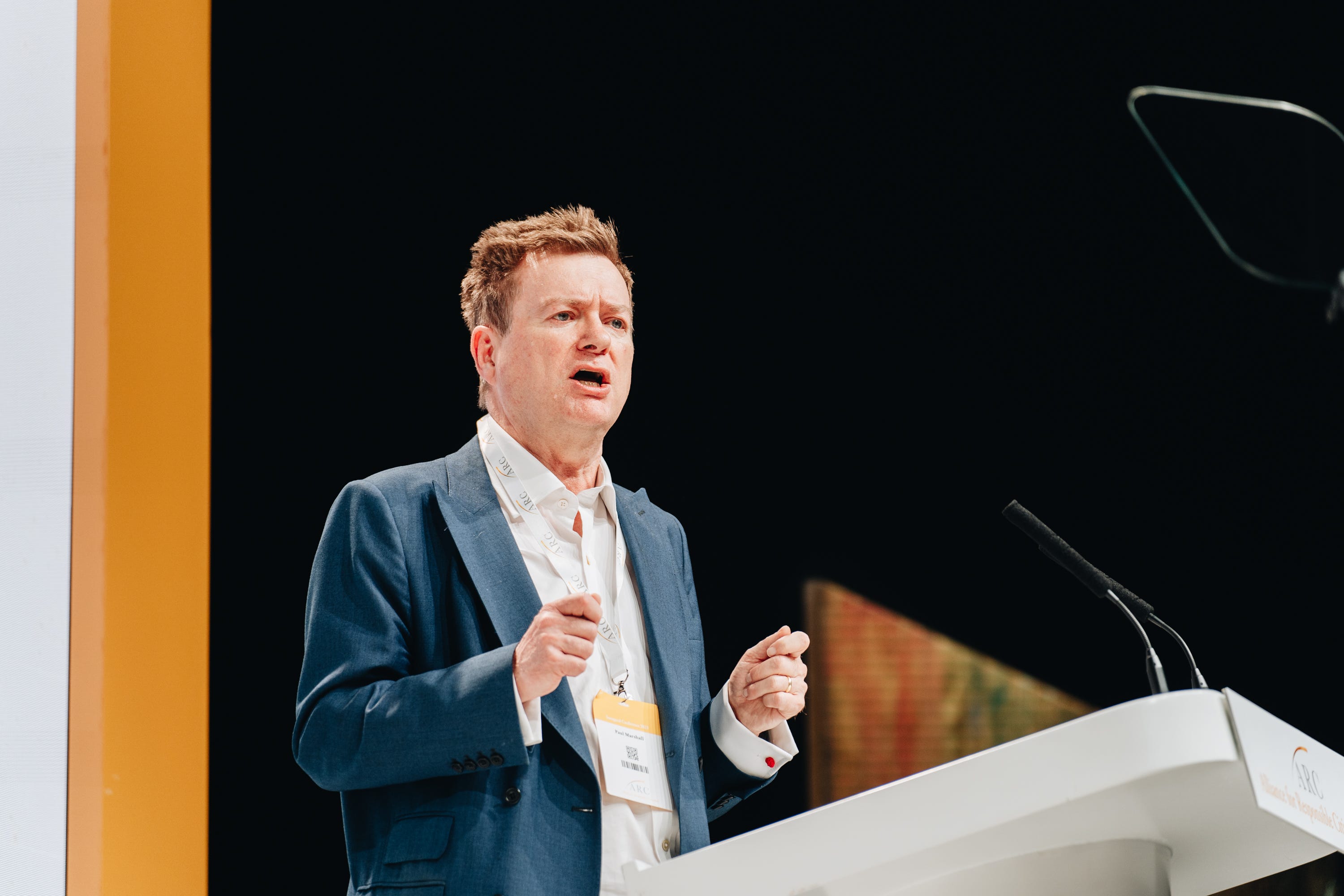
A micro-controversy has erupted once more over the contentious person of Sir Paul Marshall. He’s a super-rich hedge-fund manager and media tycoon, who owns The Spectator magazine, the UnHerd news site, and part of the GB News TV channel. He’s also an evangelical Christian, who worships at the charismatic evangelical Anglican megachurch HTB in central London. And he’s given millions of pounds to Christian groups associated with HTB, including their church planting arm Revitalise and the Centre for Cultural Witness, run by the former Bishop of Kensington Graham Tomlin.
He was originally a centrist-minded Liberal Democrat, but over time since the Brexit vote has drifted rightwards. In 2024 his secret personal Twitter account was exposed, which showed he had liked and reposted lots of hardline anti-Muslim and far-right accounts. I discussed this story and Marshall’s significance in the evangelical world as a funder in this podcast at the time. Essential background would also be this in-depth profile of Marshall by the Christian campaigner Andrew Graystone.
Now, he’s back under fire, but this time it’s not his views on asylum seekers in the spotlight but climate change. The Christian climate activist movement Operation Noah has co-ordinated an attack on Marshall over his GB News channel, which they said regularly broadcasts climate deniers and sceptics, casts doubt on the settled science that human action is behind global warming, and generally opposes efforts to cut emissions.
This, the activists argued, was in direct contradiction of the C of E’s own green policy and meant Christian groups should pause before accepting his multi-million pound donations (he’s given £13m alone to HTB and Revitalise since 2018). Darrell Hannah, the chair of Operation Noah, told The Guardian:
“As the climate crisis intensifies, we’re increasingly concerned that a fellow Christian – one with more money and power than virtually any other Christian in the UK – continues to share problematic and highly influential views on the most important issue of our time. This cannot go unchallenged. Given his outsized influence on our country – and in light of his problematic views on the most significant moral and practical challenge of our time – serious questions need to be asked about Sir Paul Marshall’s donations to faith groups, and specifically to the Church of England.”
Operation Noah earlier this year tried a more direct approach by writing an open letter to Marshall, signed by figures including the former Archbishop of Canterbury Rowan Williams and a slew of other clergy and bishops.
HTB didn’t respond to requests for comment from the Guardian, but Marshall’s spokesperson sought to play down the row by arguing that the businessman and philanthropist “generally agrees with Christian and Anglican teaching on the environment and climate change”, while also believing that pushing to reach net zero emissions by 2050 is wrong due to its “serious negative impact on poor people, their communities and the economy”. He would prefer to invest in “human innovation to adapt to and to limit climate change”:
“This is a perfectly reasonable position held by millions of people, including many Christians.”
This all sounds very measured, but is not entirely in keeping with some of Marshall’s other output, including when he said recently the UK had been struck down with “climate derangement syndrome” and when he also suggested the extent to which climate change was caused by human actions was “still subject to debate” (Spoiler alert: No it isn’t). Marshall’s also been attacked for his fund investing in fossil fuel companies, which is a slightly different debate (and also something the C of E’s own fund did until fairly recently too).
Not all Christians share Operation Noah’s feelings. The well-known evangelical cleric and blogger Ian Paul wrote a rebuttal of the activist group for Premier Christianity, suggesting that not only was GB News actually fairly reasonable on climate change reporting, but also that the rush to net zero is harmful. He also went in hard on Hannah, the vicar who leads Operation Noah, accusing his own church of having little interest in mission:
‘There is a kind of inverted ideological idiocy that would rather see money invested in a heat pump for a medieval building as it empties of people, than actually see people coming to faith and filling it with the warmth of lives made new in Jesus.
I think it is wonderful that someone like Sir Paul Marshall is putting money into serious efforts to see more people come to know the good news of Jesus for themselves. In the light of continued decline in Church of England attendance, I think we would be wise to welcome this rather than criticise it.’
This seems like playing the man rather than the ball to me. Clearly, advocacy to preserve God’s creation and protect the mostly poor people vulnerable to our changing climate is in no way in opposition to evangelism. Indeed, one of the Anglican Communion’s five marks of mission is to “Strive to safeguard the integrity of creation, and sustain and renew the life of the earth”. We can and should be doing both, not setting up some false dichotomy between heat pumps and Alpha courses.
Paul also references the C of E’s own net zero target, a hyper ambitious one to cut emissions to zero by 2030 which was set back in 2020 (by a synodical revolt from the hierarchy’s preferred target of 2045). This has seen the church hugely accelerate its efforts to cut its energy usage, swapping bishops’ cars for electric ones, sticking solar panels on vicarages and, most controversially, prodding parish churches into replacing their gas boilers with heat pumps.
This last policy occasionally causes spasms of angst, when it is reported a tiny, struggling parish’s boiler has broken and the uncaring woke bureaucrats of the church want to force the dear old biddies keeping St Cuthelberta’s-next-the-Wold going to replace it with a heinously expensive heat pump, which would actually plunge the final nail into the coffin for the precarious congregation. In reality, the policy states that before installing a new fossil-fuelled heating system, every church must demonstrate that they had considered a carbon-neutral alternative and show why it was not suitable.
I guess the broader question, beyond the legitimate debate there has always been about how the church should respond to the facts of human-caused climate change (heat pumps vs boilers, divestment vs engagement etc), is to what extent does it matter if a super-wealthy Christian donor disagrees with the church’s position? For one, the bodies Marshall has given to are not actually part of the C of E, but independent charities (there isn’t really a C of E in legal terms one could donate to). But even beyond that, should church-linked bodies refuse money because it comes from someone with somewhat odious personal opinions, whether those opinions are on net zero or Muslims?
To what extent is money sullied by the person donating it, or can it be redeemed by being put to good use for God’s kingdom? How much does money carry the taint of he who first earned it? I mean, if we take this to its logical extreme, is this very newsletter morally corrupted because I have in the past been paid a small sum for writing an article for Seen & Unseen, a website run by the Centre for Cultural Witness, which has itself accepted donations from Marshall’s foundation?
Clearly, when parish churches take in a collection they do not first conduct an exacting moral and doctrinal inventory of the giver in the pew, to check he or she does not believe anything at odds with formal Anglican teaching. Indeed, part of the frustrating glory of the C of E is how it is the prototypical broad church — it even has serving bishops and archbishops who personally disagree with some of its tenets and yet are welcome to remain under its capacious roof.
If I was a fellow congregant or pastor to Marshall, I would have some searching questions to ask him. I’m not at all convinced his news channel nor his tweets can be reconciled with the gospel. But that may be a different question to whether it is OK for church organisations to take his money.
Bishop charged with rape
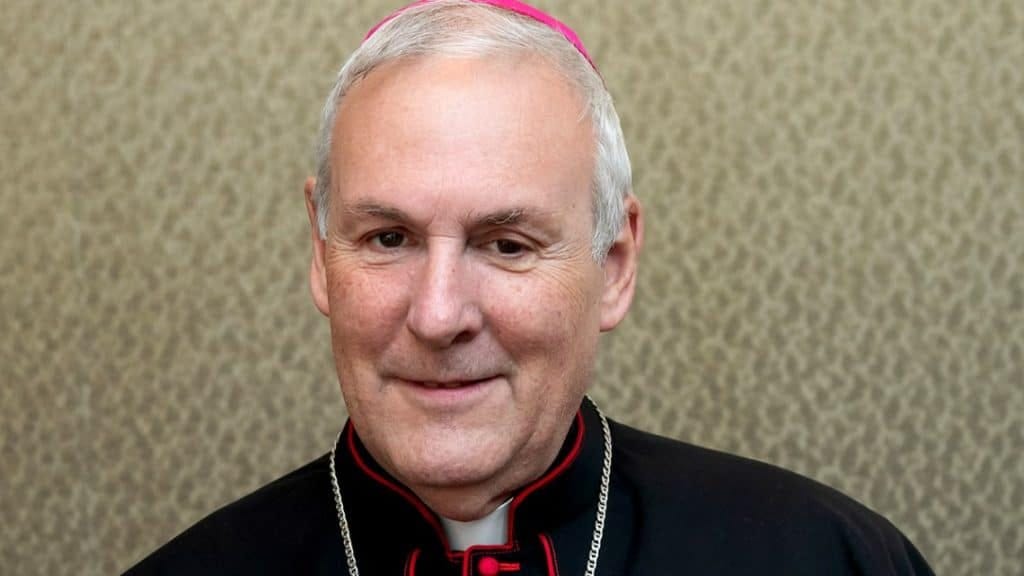
And finally, we must mention in passing the news that the Catholic Bishop of Northampton has been charged with the rape of a girl under the age of 16. David Oakley was arrested in September last year after an investigation by the police into historic safeguarding allegations.
Staffordshire Police said the offences are alleged to have taken place in Staffordshire between February 2000 and February 2001. Seventy-year-old Oakley has been a priest since 1980 and served in numerous parishes in England before rising up to become Bishop of Northampton in 2020. The Diocese of Northampton said in a statement:
“We understand that this will be very distressing for all concerned but cannot comment further on an active legal process.”
There is very little else than can be said now that a legal case is active, because of Britain’s strong contempt of court laws.
The Catholic Church in Britain has seen its fair share of abuse scandals in recent years, even if the C of E’s travails often dominate the headlines. Recently, the Bishop of Hexham and Newcastle Robert Byrne was forced into standing down in 2022, after it emerged he had promoted a priest to become his cathedral dean despite knowing he was under investigation over child sexual offences and having displayed a “clear pattern of grooming” in the past. Byrne was also criticised by an official report for his friendship with another convicted paedophile priest, who on top of regularly socialising with he also twice tried to wangle church jobs for.
The Independent Inquiry into Child Sexual Abuse devoted a whole strand of its investigations into the Catholic Church in England and Wales, concluding that between 1970 and 2015 the church received more than 900 complaints involving “over 3,000 instances of child sexual abuse against more than 900 individuals connected to the Church, including priests, monks and volunteers”. IICSA devoted considerable time to three case studies in the Catholic Church, including two schools run by monks which were hotbeds of abuse and cover-ups for years.
Autism: Disability or superpower?
Diagnosis rates for autism have been steadily rising for decades now, and as the condition has become more prevalent there has been a growing debate within the community and wider society about what autism is. Some prefer to talk about neurodiversity rather than think of it as a developmental condition, and others go as far as calling it a superpower. How should we as Christians engage in this important conversation? And should we be concerned by research efforts underway to identify an ‘autistic gene’ or pre-natal test for autism, which could be used to try and select or abort the condition away? This week we discuss these questions and more with Erin Burnett, a theologian and author who was diagnosed with autism spectrum disorder as an adult and has researched and written on the intersection between autism and the church.
Quickfire
An abuse sceptic and hardline conservative pastor has been elected the next president of the Southern Baptist Convention. America’s largest Protestant denomination has been wrestling with a deep crisis over allegations of abuse and cover-ups, as well as internal disputes over politics and theology in recent years. After several years in which it seemed the SBC was trying to get its house in order, the election of Willy Rice, a pastor from Florida, suggests Southern Baptists are lurching back to a posture of defiance and doubling down on brash MAGA Christianity. Rice has downplayed talk of an abuse crisis and attacked other Southern Baptist leaders (all of whom are by any measure conservative evangelicals) as being too liberal and captured by woke culture.
There is finally a new Bishop of Bangor in the Church in Wales. Almost exactly a year after the previous bishop Andy John was forced to
resign in disgrace‘retire’ over a complicated scandal at Bangor Cathedral and after two failed attempts to fill the post, Manon Ceridwen James has been elected bishop. Ceridwen James had only returned to the diocese last year when she was brought in to be the new Dean of Bangor Cathedral, the epicentre of the dysfunction and chaos. Now she has been promoted to the diocese’s top job (forcing them to once again cast around for a new dean…)Less good news for the Church in Wales was the announcement that the Dean of St Davids Cathedral is resigning, just weeks after a damning independent review of her cathedral concluded it could become insolvent in just two years and was failing in pastoral care. Sarah Rowland Jones said she wanted to return to parish ministry in her final few years left before mandatory retirement at 70, and made no reference to her cathedral’s precarious situation.
The Charity Commission has appointed an interim manager at the persecuted church charity Barnabas Aid. This person will be an independent figure tasked with ensuring proper governance is in place and regulations are being followed, and has been welcomed by Barnabas Aid’s leadership as a necessary part of their programme to reform and rebuild the charity. Barnabas Aid was rocked by scandal several years back when an internal power struggle finally forced out its sinister and corrupt founder (and convicted sex offender) Patrick Sookhdeo (who recently died while still under police investigation). Other probes by the police and Commission remain ongoing.
The Archbishop of Canterbury Sarah Mullally has just completed a pilgrimage through the Holy Land, to offer her solidarity to Palestinian Christians there. Mullally’s visit included time in Bethlehem and Nazareth, as well as meeting Palestinian believers suffering under the increasingly oppressive Israeli occupation. She also met with Layan Nasir, a young Palestinian Anglican activist repeatedly detained by the Israeli authorities because of her activism. At the end she issued a joint letter with the Anglican Archbishop of Jerusalem, Hosam Naoum, in which they spoke of their fear that the “indigenous Christian Palestinian presence in the Holy Land” dating back to the time of Christ could soon end despite the community’s “faithful resistance”. Annexation of the West Bank in all but name and escalating violence by Israeli settlers was making life close to impossible, the archbishops warned, while the “profound suffering” in Gaza continued despite the world’s gaze turning away. The letter ends by calling for an end to the occupation and a peaceful two-state solution, with Jerusalem as a shared capital city which respects the religious rights of all believers in it. Around the same time, many church leaders and organisations, including the Archbishop of York, launched a new campaign called Time to Act, which demands sanctions on Israel, an end to arms sales there and a boycott on trade with the occupied territories. Time to Act is also supported by the Church in Wales, the Methodists, the United Reformed Church, the Quakers and a slew of Christian aid agencies and charities.
Bizarre story in the Guardian about the eccentric Armenian millionaire who, not content with being a high-profile opposition politician and flamboyant businessman, is now preparing to build the world’s largest statue of Jesus. Gagik Tsarukyan claims the statue will make his small Caucasus nation famous worldwide, and ensure Christianity becomes Armenia’s “brand” (by tradition Armenia was the first nation in history to convert en masse to the faith in AD 301).
The former head of the Democratic Unionist Party Jeffrey Donaldson has been convicted of abusing two women when they were underage. Donaldson had made much of his Christian faith during his political career, but the court heard how the politician had not only cheated on his wife more than once, but also met with the two victims in a Christian church in the 1990s to apologise for his abuse of them when they were younger. Donaldson denied this, but evidence was also heard from the pastor who facilitated the meeting (and jotted down in his diary afterwards Bible verses about forgiveness and reconciliation). When on the stand, Donaldson told his own defence lawyer that “We are all sinners, Mr Vaughan, I am a sinner. Every day we ask God for forgiveness”, but denied the allegations against him of assault.
The bishops to lead the next chapter of the C of E’s debates over sexuality and marriage have been announced. The Bishop of Winchester Philip Mounstephen will chair a new Relationships, Sexuality and Gender Pastoral Consultative Group, which will try to guide bishops and dioceses on how to handle individual cases and disputes, and ensure consistency across the church. The Bishop of Sodor and Man Tricia Hillas will chair the main Relationships, Sexuality and Gender Working Group, which will explore the unresolved policy and theological questions from Living in Love and Faith (most notably, standalone services of blessings for gay couples, and the ban on gay vicars getting married). We could dive into the personal convictions of either (to the extent that is known at all) but to be honest, I don’t know how much their theology will shape the outcome here. In particular, as extensively litigated out over the last two years, any changes to church policy on gay clergy or standalone gay blessings will require votes in synod, not simply the approval of a group of bishops in a committee.
The government has finally published a draft bill to ban conversion therapy. Many, many years in the making (so many in fact it was first promised by Theresa May, just six prime ministers ago), the bill will outlaw “abusive acts” aiming to change someone's sexual orientation or transgender identity. It remains to be seen if the particular wording and definitions will appease the conservative Christians who have consistently lobbied against such a ban, arguing it would be used to curtail the free speech and religious expression of church leaders and others who want to express their traditional opposition to same-sex relationships or gender transitions.
Our soon-to-be new prime minister Andy Burnham was raised a Catholic, and he continues to explain his identity through three poles: Everton Football Club, the Labour Party, and the Catholic Church (apparently in that order of importance too). This is an excellent long-read exploring what Catholicism means to Burnham (it’s more about solidarity and resistance to London than adherence to the church’s actual social teaching) in The Times, which I strongly recommend.
Thanks for reading — please continue sharing The Critical Friend with someone you think might enjoy it. And, as ever, my wholehearted thanks to those who have upgraded to a paid subscription of £5 a month: you make this newsletter possible and I’m very grateful.
Thanks for the note on the latest with Marshall (and for including the link to Andrew Graystone's write up, which is excellent). There's something quite...odd? noteable? surreal? about discussing climate change and church populations in the middle of a Met Office issued red alert for severe heat, indicating a risk to life even to the healthy.
The questions for me relating to the donations from a super-wealthy donor who disagrees with the church's position are ones of closeness of connection and proportion of income. Marshall isn't any old donor.
No he doesn't (and indeed, could not, as you point out) donate directly to "The Church of England". But the organisations within the church to which he does donate have a significant impact on the life and work of the church, both locally and nationally. To take the figures as reported in the Guardian (yes, yes, yes, I know) https://www.theguardian.com/environment/2026/jun/09/christian-leaders-alarmed-by-climate-crisis-raise-questions-over-gb-news-owners-28m-church-donations and from my own back of a fag-packet (actually, corner of the CT) calculations:
HTB's income from donations as declared to the charity commission last year was £9.5m. Marshall gave them £5m over 6 years. If that has been steady for the past few years and if his gifting was distributed evenly, which I realise is a lot of assumptions, he gave about £800,000 a year, about 8%.
If you take the same approach to the CRT, donation income yearly £6.6m, Marshall's donation £13m over 6 years, that's about 32% of their donated income, and that is significant. There's a chance my calculations are inaccurate, and corrections are welcome. But they seem kind of ballpark right to me.
I also do not take seriously his claim that a move towards net zero has a "serious negative impact on poor people, and their communities......." for 2 reasons. Firstly, if he were that concerned by people's financial circumstances, he could give some of his vast wealth away. Perhaps he does, secretly. Secondly, his firm Marshall Wace made £13m in 2017 betting on the collapse of Carillion - a company who at the time had significant public sector contracts and who would have employed a number of low paid workers.
(Apologies for the somewhat essay length comment).
Hi Tim, thanks for the mention!
On training stipends: the Church Commissioner's budget for bishops ministry for the next three years is £143m. (Yes, you read that aright!). I wonder what would happen if, either a good chunk of that was diverted into theological education and ordinand stipends, or if (as in some other churches) bishops received the same stipend and pension as other clergy, and the surplus left was put into ordinand stipends? It might suddenly look affordable.
On climate change and Paul Marshall: the criticism was that, because of some of the views expressed on GB News which Marshall owns, we should not accept money from him for evangelism and church planting. The person who made that argument spends quite a lot of time and energy on climate issues, whilst his own church is in steady decline (and could disappear in about 10 years time) and its website has not a single mention of how to explore the Christian faith.
So yes, 'We can and should be doing both', but the evidence is that many on the climate side are not. And struggling small local rural churches have finite resources, and all the evidence is that net zero is a lot less challenging to put energy into than actually talking to your neighbours about Jesus.