
Half-empty or half-full?
Some more confounding data emerges on church attendance, a one-time evangelical hero finally faces justice (of sorts), while Pope Leo evades simple categorisation

Hello! Our first story today is about some interesting new data points in the ongoing conversation about church growth (or indeed, decline) in Britain. The C of E’s numbers are up, but is the gold-standard British Social Attitudes survey telling a different story?
Then we look at the full, bleak details of the crimes of another previously influential evangelical vicar who was engaged in grimly familiar abusive and violent ‘mentoring’ of young men.
Finally, we explore some of the recent actions of Pope Leo and consider to what extent he is continuing the path of his predecessor Francis. Is the first American pontiff a frustrated liberal, a closet conservative, or something else more complicated entirely?
There’s also our latest podcast (What would Christian IVF look like?) and links to a heap of interesting church news stories from across the web, including this week floor-licking monks in the Orkneys, an exiled Iraqi archbishop returns, and how the Reformed brand is getting a little tarnished.
Half-empty or half-full?
To be honest, I really didn’t expect when I started this newsletter to spend quite so much time talking about church attendance statistics. But we must go where the news sends us, and this week we have two interesting new bits of data to feed into the now surprisingly lively debate about church attendance in Britain.
First, the Church of England released an advance snapshot of their annual statistics, which showed that churchgoing had increased for the fifth year in a row. Across 2025, about 707,000 attended a C of E service in a normal week, an increase of 0.7% on the previous year. If you zoom in solely on Sunday worship (i.e. ignoring midweek services), the number is 590,000, up 1.6% on 2024’s number.
The overall picture is interesting, because things could be both good or bad, depending on how you see things. The glass half-full lot will point to five years of growth in a row, which I’m pretty sure must be utterly unprecedented in the 40 or so years the C of E has been collecting good quality stats. Yes, the annual growth we are seeing is pretty modest, normally in the region of 1% or so, but growth of any kind sustained over more than just one blip year here or there is cause for celebration given the calamitous and previously inexorable decline we’ve experienced for approaching 80 years.
The glass half-empty people will see it differently. Small growth is better than decline, sure, but zoom out to see the bigger picture. Weekly attendance was 864,000 in 2019 before covid hit. Despite five years of growth, last year it was just 707,000. The fact that since the nadir of 2020 it has crept upwards a little doesn’t really make much difference. In fact, despite the unprecedented five years of growth, weekly attendance is still down a pretty punishing 18% compared to the last pre-pandemic figures. And that 2019 number was not some kind of high water mark, but at that point the lowest number ever recorded in the church’s modern history. Furthermore, the population of England between 2020 and 2025 went up by almost 5% anyway, so small 1% per annum growth is only just keeping up and doesn’t represent real growth, you could argue.
In other words, the very welcome rebound since covid has not even come close to cancelling out the enormous drop off in churchgoing we saw during the lockdowns. Then again, as I wrote this time last year, I’m not convinced you can really put even small 1% growth simply down to a covid-era bounceback. I find it hard to imagine there are any Anglicans in England who lost the habit of churchgoing in 2020 and only rediscovered it five long years later. It feels much more plausible that the numbers are going up because new people are coming to church, rather than previous attendees finally coming back.
This is the great frustration really with all the debates in recent years about ‘revival’. We can safely dismiss the overheated claims of explosive 56% growth made (and since retracted) by the Bible Society. But there is much more to be said for a discussion about a vibe shift. No dramatic turnaround, but the slow fizzling out of the triumph of atheism and a growing openness to spirituality. Could this be filtering through to real, hard, measurable growth in churchgoing?
If there had been no pandemic in 2020 and still the C of E’s numbers trickled upwards five years in a row then we could pretty confidently chalk that up as good evidence for something tangible happening in modern British culture (especially if replicated among other denominations). But because this supposed vibe shift happened right around the covid crisis (perhaps not coincidentally?), it’s very difficult to parse all subsequent figures as they have taken place in the aftermath of an unprecedented drop off in churchgoing during the pandemic.
Before we move on, there are some other encouraging signs in the snippet of stats the C of E released: Christmas attendance last year was at 1.96 million, up a more impressive 5.5% from the previous year. Easter was even stronger, up 7.8% to 1.03 million. However, both figures are still well below 2019’s numbers (about 2.4m for Christmas and 1.2m for Easter). But on the other hand, they might be at or even slightly surpassing where they would have been if the 2009-19 trend had continued without a pandemic. Again, it’s a very mixed and confused picture.
The second thing on church growth worth paying attention to was an article by statistician John Curtice (who is a very big name in the field, he’s the guy hired by the BBC to analyse election data for instance). Curtice has examined the latest data on religion from the 2025 British Social Attitudes (BSA) survey, a long-running and gold-standard random probability survey which has been carried out since the 1980s.
It’s much less ambiguous, and unfortunately it’s not good news for those of us who long to see the church grow. Curtice’s piece is headlined: ‘No revival in sight: Church attendance in Britain remains below pre-pandemic levels’. The main finding is that contrary to the Bible Society and others, the BSA data shows that churchgoing has not grown UK-wide, and remains below its pre-pandemic level. Curtice also reports that the BSA survey found that, again contrary to what many are saying across the church, younger people are the least likely cohort to go to church.
About half (49%) of the British public tell pollsters they belong to a religion. Zooming in on this group, the BSA found that of those who say they are Christians, just 13% (one in eight) claim to attend church each week. In 2018, pre-covid, this number was much higher at 20%. Taken as a share of the total population (i.e. not just those who say they are Christians), this weekly churchgoing number has dropped from 8% in 2018 to 5% in 2025.
You can also examine the numbers by looking at attendance at least once a month (the measure the Bible Society’s Quiet Revival poll used). This shows similar decline, albeit broken down into generations. So for the 18-34s, the Gen Zs and Millennials who are supposedly behind any revival: in 2019 34% of self-described Christians of this age reported going to church at least once a month. In 2025, that number had fallen to 26% (and remember this is 26% of the sub-set of the population who call themselves Christians). Intriguingly, this younger cohort claims to attend more than those aged over 55, who you might think were the more reliable churchgoers. That generation’s figure has dropped from 28% in 2019 to 20% last year.
Going back to weekly attendance, you can dig out some fascinating insights from the BSA data Curtice has published. The number of Anglicans who say they attend weekly has remained basically steady as a rock from 2017 to 2025 at around 9% (although that in itself is pretty damning, that an astonishing nine in ten of those who consider themselves Anglicans don’t actually go to church).
The real declines are among the Catholics and other denominations. In 2017 both of these were doing much better than the Anglicans at converting affiliation into worship: 25% of Catholics were going to church weekly, and 27% of those from other denominations (lumped together in the BSA as ‘Other Christian’). But both have since plummeted, almost by half. In 2025 just 15% of Catholics and 13% of Other Christians attend church weekly, meaning they are not far off levels of Anglican apathy and nominalism.
The other interesting finding is on age. The decline in weekly attendance (as a share of the whole population, not just Christians) has been much, much more marked among older people than the young. In 2017 5% of Britons aged 18-34 went to church, and in 2025 this had only fallen to 4%. But the corresponding decline for 35-69-year-olds was bigger, from about 9% in 2017 to 5% in 2025. And it was even worse for the retired: 70+ church attendees were at 18% in 2017 and had halved to just 9% by 2025. In other words, yes young people have long attended church much less than the old. But, these days, their attendance is holding steady at this lower rate while the older generations slump down to meet them. As Curtice summarises it:
‘If some Christian congregations are looking a little younger these days, it would appear that it is more likely to reflect a loss of older congregants than any marked success in persuading more younger people to walk through the church door.’
Younger people are much less likely to identify as Christian (just one in four say they are, compared to more than half of the over-55s), but for those who do claim the name of Christ, they are more likely to be practising believers than the more nominal Christians you find among the old. This basically fits the smell test, as it matches up with what almost anyone could tell you: younger British people are much less likely to claim a nominal Christian faith and happier, if they do not actually believe in God or go to church, to tell a pollster they have no religion. And so that generation is simultaneously the least religious, and yet also — among those who are believers — the most fervent. If you’re a 20-something and tick the Christian box in a survey, you are more likely to actually follow Jesus for real.
Perhaps this phenomenon helps explain the jarring dissonance you get between the anecdotal reports of revival on the ground, and the sober evidence of decline in statistical research such as this. As the church shrinks it becomes simultaneously smaller numerically and yet more vibrant and earnest because those who remain are the true believers.
Six of the best

A court has found the conservative evangelical vicar Jonathan Fletcher indecently assaulted a man for more than 25 years, inflicting on his victim regular beatings on his bare buttocks with a gym shoe. The unnamed victim said Fletcher, who was for years the highly influential leader of Emmanuel Church in Wimbledon, South London, would insist on giving him “six of the best”, presenting it as spiritual discipline for the sin of masturbation.
Fletcher was first exposed as an abuser by the Daily Telegraph back in 2019, and this was later confirmed by an independent review Emmanuel commissioned from the Christian safeguarding charity Thirtyone:eight. That review, published in 2021, spoke to dozens of people who had worked with or under Fletcher during his ministry and concluded he had committed repeated patterns of “harmful behaviour”. These included coercion and control, bullying, spiritual abuse, naked massages and saunas, ice baths, and the now infamous beatings with a gym shoe. One person also told Thirtyone:eight that Fletcher had demanded they “perform a sex act in front of him” and when they refused, Fletcher did it instead.
After this all came out, Fletcher made some apologies to anyone he had hurt, while insisting that all of this had always been consensual if rigorous mentoring and discipleship, and never sexual in nature. In 2024, he was charged with indecent assault by the police, and while admitting the beatings took place Fletcher denied they had any sexual intent and pleaded not guilty. However, by the time the case came to trial years later, the 83-year-old vicar was suffering from dementia and was ruled unfit to stand trial.
Instead, a ‘trial of the facts’ was held — this sees a jury brought in to consider the evidence and rule on whether they think the alleged acts took place or not. But there is no formal finding of guilt or innocence, and the judge’s only options at the end are an absolute discharge (no penalty) or a a supervision or hospital order for the defendant. Fletcher’s defence offered no evidence, and in the end the jury concluded the beatings had taken place without the victim’s consent. The main evidence was a police interview with the victim, the Christian newspaper Evangelicals Now reported:
“He would say ‘Six of the best’, very matter of fact, he would just get it over with. Always six strokes. He gave the impression he found it distasteful. Regrettable but necessary [for] spiritual discipline, promoting holiness in life.”
The victim first met Fletcher in their teens and by 16 was doing Bible studies and confirmation classes at the his flat. The vicar took the victim under his wing, inviting him to lead on Christian summer camps and even as an adult regularly checking in on his spiritual life. At each of these meetings, Fletcher would always ask if the victim had been masturbating.
The beatings to purge him of his sins carried on for over 25 years, and culminated in one particularly brutal assault in the 1990s which the victim said left him feeling “worthless” and suicidal. Fletcher also at one point told the victim he needed to masturbate in front of him as an “action replay”, supposedly to shame him into stopping. When the victim could not, Fletcher masturbated him instead.
The judge said she had no choice, despite the jury’s findings, to impose an absolute discharge for Fletcher, who is now living with advancing dementia in Leicestershire. In a statement afterwards, the Bishop of Southwark Christopher Chessun (whose diocese Emmanuel fell under and from whom Fletcher held permission to officiate in retirement) said:
“I would like to pay tribute to the survivor’s courage and strength in sharing his experiences and I acknowledge that this process has been very costly for him. While it cannot undo the pain of the past, we hope that this ruling will give him some comfort and enable him to move forward. We will continue to make safeguarding our highest priority, seeking to learn the lessons of the past and ensure that survivors’ voices and concerns inform our safeguarding practice.”
If any of this is sounding grimly familiar, it may be because so much of this case echoes the John Smyth story. Just like Smyth, Fletcher was a charming, charismatic and forceful leader in conservative evangelicalism from the 1970s to the 2000s. Just like Smyth, Fletcher had been raised in public schools and exemplified the upper class elitism of the conservative evangelical movement at the time. Just like Smyth, Fletcher was deeply embedded in the Iwerne camps, having grown up in them himself before becoming a leader for many years in the movement. And just like Smyth, Fletcher groomed young men in intense and manipulative mentoring relationships which culminated in regular beatings to supposedly discipline them for their sins.
It’s not just those two either: the actual leader of the Iwerne camps was Fletcher’s brother David, who later became the vicar of the conservative evangelical powerhouse St Ebbe’s, Oxford. David Fletcher, who died a few years earlier, was accused by Channel 4 News last year of assaulting young women. Fletcher was the lead figure in the coterie of senior evangelicals who helped cover up Smyth’s crimes when they were first revealed in the early 1980s.
What we can safely conclude is that at the very top of this niche of the British church was at least three (and maybe more) serious abusers. There’s nothing especially unusual about that, of course, abuse has been uncovered in every single church tradition and denomination. But something about conservative evangelical Anglicanism either attracted abusers or at the very least made it easier for abuse to continue for years. There are many factors at play here, including the public school elitism, the extreme deference to ‘robust’ leaders, huge emphasis on one-to-one mentoring, the defensive posture and fear of outside accountability, obsession with sexual holiness and masturbation in particular, muscular Christianity and much more.
There is a useful appendix to the Makin review into Smyth which explores these factors from a psychological perspective which is worth reading (page 13 onwards here), and earlier this year I did a podcast interview with Elly Hanson who wrote this part of the review which is also worth listening to if you missed it first time round. The Thirtyone:eight review into Fletcher and Emmanuel Wimbledon is also insightful into the cultural issues which enabled the abuse to persist. Fundamentally, we know that what Fletcher and Smyth were doing was not entirely secret, and yet almost none of their evangelical friends and colleagues who found out about the beatings thought they warranted calling the police, or even passing it on up the chain to the C of E hierarchy.
As I’ve noted before, there are some hopeful and encouraging signs that many within conservative evangelical Anglicanism are taking this crisis seriously and openly exploring what they need to do differently in order to safeguard their people from abusive leaders. No doubt much of what this tribe is wrestling with will be useful to the whole church too.
A complicated man
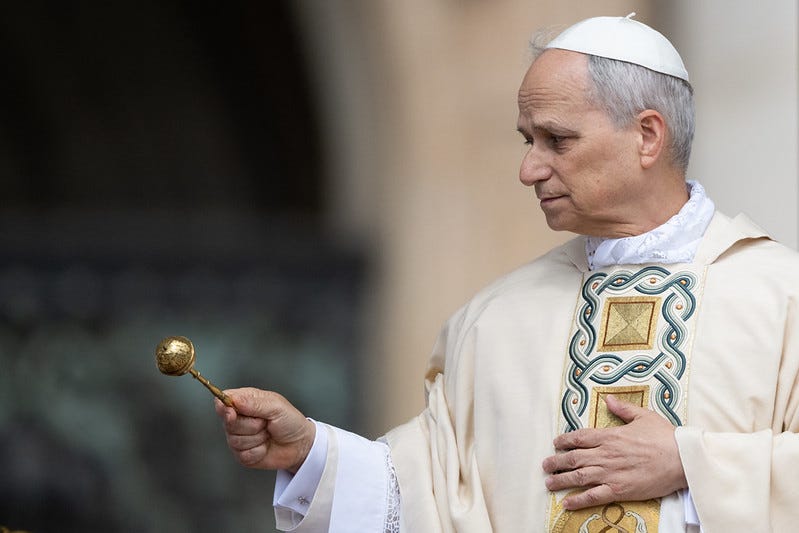
Perhaps the big question non-specialist journalists always want to ask of church figures is whether they are liberal or conservative, traditionalists or progressives. Are you in favour of all that good 21st century modern stuff like gay rights, women’s ordination, interfaith dialogue, are you relaxed about sex outside marriage and abortion etc etc. Or are you one of those diehards who wants to hold onto everything the church used to believe, who oppose abortion and women’s ordination and gay marriage and everything else?
It’s not a stupid question, and if your job is to make the strange esoteric things churches do comprehensible to a non-Christian in a two-minutes-30-seconds package for the evening news, it’s a reasonable way to try and explain the story. I sometimes use those two labels to try and explain who people are in this very newsletter.
But for those of us who want to dig a bit deeper, it can be a bit reductive. Lots and lots of church leaders don’t neatly fall into the two buckets of liberal or conservative. Lots of Christians don’t decide if they are a progressive or a traditionalist and then adopt the package deal of positions which supposedly comes with that identity.
One person who the media sometimes found challenging to pigeonhole was Pope Francis. All the vibes he gave off screamed to non-specialist journalists that he was a liberal. He was informal and relaxed, he dispensed with lots of the frummery around the papacy, he was focused on serving the poor and spoke out about climate change and people trafficking and exploitative capitalism. Perhaps most famously, he said early on that he didn’t want to “judge” gay people who were “searching for the Lord”, language which, while vague, was startlingly warm towards the LGBT community considering it came from the head of the Catholic Church.
And yet, if you paid a bit more attention, you’d notice he didn’t actually change much on all those core Catholic doctrines which progressives rail against. Women did not move an inch closer to becoming priests. Gay marriage is still an absolute impossibility in church. Clerical celibacy is not up for discussion. Contraception, assisted dying, abortion — the Catholic Church under Francis was still resolutely opposed. You could characterise his papacy as presentationally progressive but functionally traditionalist.
But again, this would do a disservice to the subtleties of how Francis sought to change things from his definitely conservative predecessors Benedict XVI and John Paul II. He restricted usage of the old style Latin Mass, which serves as a rallying cry for those opposed to the modernising reforms of the Second Vatican Council. He made a big push for the church to adopt a ‘synodal’ style of deliberation and governance. This is not something which is easy to explain in two minutes on the evening news, nor did it lead to sweeping progressive reforms, but it was a major attempt to decentralise a bit of authority in the hierarchical church and open space for more internal dissent and conversation.
And then, in the final years of his papacy Francis caught much of the watching world on the hop when he approved, somewhat out of the blue, private blessings for same-sex couples. Hang on, was he actually a liberal after all hiding in plain sight? Except maybe not, as a few months after permitting gay blessings Francis was reported to have told Italian bishops behind closed doors to be careful not to let gay men into seminaries, as there was too much frociaggine (a crude slang term best translated as ‘faggotry’) in them already. He also signed off another report from the Vatican’s doctrine office in 2024 which strongly reaffirmed the church’s hostility towards gender transition and sex changes.
I rehash all this to set up a series of intriguing decisions made by Francis’s successor, Leo XIV. We’ve already touched on some ways in which the first American pope is trying to simultaneously build on Francis’s legacy while also subtly tacking back towards the centre-ground. Because much like Francis, Leo is not someone easy to pigeonhole as a liberal or a conservative.
He’s pro the synodal approach of Francis, but has also previously spoken out against the “homosexual lifestyle”. He’s opposed to women’s ordination but has attacked those who question the urgency of tackling climate change. And now we have one of the first straws in the wind for how Leo will approach some of the most challenging ethical flashpoints.
Earlier this month, the Vatican published a report from a committee of theologians which explored same-sex relationships. Notably, it included testimony from gay Catholics who are married for the first time, and criticised conversion therapy. It also acknowledged the church had played a part in “the solitude, anguish, and stigma that accompany persons with same-sex attractions and their families”.
This study group which was produced the report was an offshoot from Francis’s Synod on Synodality. Progressives hoped the synod itself might push through liberal reforms (and conservatives feared it would and tried to forestall it). In the end, neither happened — all the controversial stuff was kicked into the long grass or farmed out to these theological committees to consider in more depth.
Now, the document does not call for any change to church teaching but it does urge the church to find a way to reconcile “doctrinal firmness” and “pastoral welcome”, incorporating insights from the social sciences alongside traditional sources of authority such as church teaching and the Bible. For those of us who went on the Church of England’s Living in Love and Faith journey (which involved lots of study and discussion and ending up not changing doctrine but trying to incorporate some better pastoral welcome within it), it all sounds quite familiar.
And while Leo didn’t write this document, nothing comes out of the Vatican without his approval in some way or other. So you have a signal of increased openness to LGBT Catholics, a willingness to engage with them with respect and even challenge some conservative positions (for instance, on conversion therapy). And yet, no doctrinal shift on the core teaching. Indeed Leo has also spoken publicly to rebuke the Germany Catholic bishops who have produced a formalised liturgy for services of blessing for gay couples (something Francis opposed, only permitting private informal blessings).
Another interesting sign in Leo’s approach has emerged recently over the Society of St Pius X (SSPX). This group of ultra-traditionalists have been around since the 1970s and were formed in vociferous opposition to the modernising reforms of the Second Vatican Council (in particular the suppression of the Latin mass). Led by a renegade French archbishop, SSPX consecrated its own bishops without Vatican authority in the 1980s, prompting the church to excommunicate its leaders. In the decades that followed, Popes John Paul II and Benedict XVI tried to court the group and its traditionalist supporters back into the mainstream, and SSPX has grown into an international network of hundreds of priests, monks, seminarians and parishes in 50 countries.
Earlier this year SSPX announced it would consecrate two new bishops as its existing ones are getting too old. The Vatican has tried to head this off and sought talks to defuse the crisis, but so far SSPX has stood its ground. Francis had almost no sympathy with the traditionalists and had cracked down on the growth of the old Latin mass. But if Leo was trying for a softer approach which might heal divisions between conservative and liberal wings, it has so far failed. And if the conservatives hoped he would prove a softer touch than the uncompromising Francis on this issue, it looks like they were wrong.
A final warning was issued by the Vatican last week that if the SSPX consecrations do go ahead as planned, its leadership will be automatically excommunicated from the One Holy Catholic and Apostolic Church. And that is a move which will upset not just the thousands of traditionalists within SSPX, but millions of sympathetic conservative Catholics still worshipping in official church bodies around the world.
As I’ve been saying — these things are nuanced. It feels like Leo is in some ways as hard to parse as Francis. Neither a full blown progressive, nor the traditionalist others were hoping for, but something complicated in between. Indeed, his first ‘proper’ intervention as pope is about something which doesn’t easily fit into our comfortable niches too: artificial intelligence.
Leo flagged up when he became pope last year that he’d chosen his name in honour of Pope Leo XIII, an influential figure from the later 19th century most famous for an encyclical (a papal open letter which lays out new teaching) which tilted the church towards a more pro-worker approach to the Industrial Revolution.
This letter, Rerum novarum, published in 1891, is today hailed as the cornerstone of what coalesced into Catholic Social Teaching, and it forged a middle way between the laissez-faire capitalism of the industrialists and the atheistic socialism of the rising political left. On just his second day as pope last year, the new Leo told the cardinals who had just elected him as pontiff:
“Pope Leo XIII, with the historic encyclical Rerum novarum, addressed the social question in the context of the first great industrial revolution. Today, the church offers to all her treasure of social teaching in response to another industrial revolution and the developments of artificial intelligence that pose new challenges for the defence of human dignity, justice, and labour.”
The speculation then was that Leo’s first encyclical would be on AI, and so it has proved. The letter, entitled Magnifica humanitas (Latin for, unsurprisingly ‘Magnificent humanity’), will be published on Monday and will address “safeguarding the human person in a time of artificial intelligence”. As if the resonances weren’t yet completely obvious, Leo completed and signed the encyclical on 15 May, the 135th anniversary of the release of the other Leo’s Rerum novarum.
We don’t yet know what argument Magnifica humanitas will make, but it is expected to try and place the upheaval of the AI era in the context of the church’s social teaching on labour relations, justice and peace, the AP news agency reported. The Catholic Church has already been surprisingly ahead of the curve in terms of responding to AI, having published Antiqua et nova, a briefing on the relationships between AI and human intelligence, last year. As long ago as 2020, the Vatican tried to coax tech companies to sign up to a joint ‘Call for AI Ethics’ and in his final years as pope Francis also called for an international treaty to regulate this emerging field (the late pontiff had already one of the first victims of a widespread AI-generated hoax image).
Does caring about AI make Leo a conservative or a liberal? The answer, I guess, is that it’s a bit more complicated than that.
What would Christian IVF look like?
For couples experiencing infertility IVF is often the first port of call, and today millions of children have been brought into the world through this powerful reproductive technology. But many Christians are concerned about how IVF is normally practised, with dozens of fertilised embryos created but not actually re-implanted, lingering on in frozen limbo, destroyed or donated for scientific research. Some Christian fertility doctors have set up their own clinics to pursue ‘ethical’ IVF, sharply limiting how many spare embryos are created and tweaking the process to make it more amenable to conservative and pro-life believers. Today we explore one story of an IVF doctor whose conscience drove him to do just this, and the ethical questions which surround trying to do IVF differently.
Quickfire
An eccentric and reclusive order of monks living on a tiny island in the Orkneys is coming under scrutiny after one of their brothers disappeared. The Transalpine Redemptorists (later renamed the Sons of the Most Holy Redeemer) were founded in the 1980s in opposition to the modernisation of Vatican II, and have been accused of unlicensed exorcisms and extreme penance, including forcing monks to lick the floor. Their New Zealand branch was expelled from the country in 2024 by the local Catholic bishop after a TV expose of alleged abuse, including intense exorcisms lasting hours. Last month, the monks discovered one of their number had disappeared from their Golgotha Monastery on the island of Papa Stronsay. The police have been searching the island and nearby seas, and say there are so far no suspicious circumstances.
Is it time for the Church of England to just get rid of all its pews? That’s the argument of this comment piece in the Church Times, which I have to say I find quite compelling.
An Iraqi Christian forced into exile a decade ago by the murderous persecution of Isis has returned to become his church’s leader. Amel Shamon Nona was the Archbishop of Mosul in the Chaldean Catholic Church (an Eastern Orthodox derived denomination now in full communion with the Catholic Church) when Islamist extremists took over that part of Iraq in 2014. After witnessing countless members of his church killed, he fled into exile in Australia to lead the expat Iraqi Christian community there, but is now returning to Baghdad to become patriarch. He has taken as his motto words from Mark 5: ‘Do not be afraid, just believe.’
March for Jesus is a bit before my time, but I’m told it was quite a big deal for a while in the 80s and 90s. It was an ecumenical worship and prayer event which used to bring together millions of Christians in public spaces across the world. The last one was in 2000, but now it is being revived by the Ichthus Fellowship, the same charismatic house church movement which founded it back in 1987. The new organiser has told Premier Christianity that they’d sensed a growing openness to God since the pandemic and felt called to draw Christians together to march through London again. Although this time round they’re calling it the Jesus March to more clearly differentiate it from the plethora of far-right movements claiming their political activism ‘for Jesus’.
The upcoming Indian census is putting the country’s Dalit Christians in a tricky spot, forcing them to decide between declaring their faith and maintaining access to state benefits and support for being part of a discriminated against caste. Dalits, formerly known as Untouchables, are the lowest rung on India’s caste hierarchy, which entitles them to various forms of state support to counter this prejudice. But Indian law states caste discrimination only occurs within Hinduism, Sikhism and Buddhism, and so if a Dalit converts to Christianity (as many do) they lose access to this support. For the first time, the upcoming census will ask about both caste and religion, forcing Christian Dalits to formally choose whether to hold onto their caste entitlements or their faith.
In America, a new bishop has pledged to keep on speaking up for migrants, 40 years since he was himself smuggled over the border after fleeing war in El Salvador. Evelio Menjivar-Ayala, who was appointed a bishop in West Virginia by Pope Leo in the midst of the pontiff’s spat with Donald Trump, has said every time he hears about someone swept up in the Immigration and Customs Enforcement raids he thinks “that could be me”.
A 52-year-old church magazine has changed its name to dissociate itself from the Reform UK right wing political party. The magazine of the United Reformed Church had been called Reform for decades, but has now rebranded to Reformed to ensure there is no confusion or overlap with Nigel Farage’s insurgent populist nationalist movement. In a survey, 86% of Reform’s readers backed the change, with one saying: “Much as I enjoy reading Reform, I make sure I hide the magazine when visitors come round, for obvious reasons.”
Premier Christianity has done an interesting interview with a Christian property developer who has pledged to buy up vacant church buildings and rent them back to congregations free of charge. While the promise has won Samuel Leeds adulation, others have previously accused the influencer of peddling overpriced get rich quick schemes to his gullible followers.
The controversial and disgraced former head of Barnabas Aid, Patrick Sookhdeo, has died aged 79. Sookhdeo founded and ran one of the UK’s largest persecuted church charities for decades, shrugging off criminal convictions and regular fallings out with his own staff and board, until he was finally ousted a few years ago following a damning internal investigation. The unrepentant Sookhdeo tried to take his loyal supporter base with him to a new charity, even after he was arrested by British police investigating allegations of fraud.
The Church of Scotland has formally apologised for its historic role in the slave trade, both for offering up theological defences of slavery and for some of its members and leaders personally being enriched by trafficking and owned enslaved people.
Thanks for reading The Critical Friend. Please keep on sharing this newsletter with others, and if you appreciate what I do could you become a paying subscriber? It costs just £5 a month and is really helpful in supporting me to write this each week.