
Don't ask, don't tell
How did a vicar with a history of underage sexual abuse manage to rise up to become a bishop? Plus most Christians - but not all - call for peace in the Middle East

Hello! Our main story this week is about Anthony Pierce, a former Bishop of Swansea and Brecon who was jailed for indecent assault of a child last year. A devastating independent review of what the Church in Wales knew of his case has now been published, prompting yet another anguished reckoning about how, despite many senior figures knowing about his abuse, Pierce not only became a bishop but remained active in church ministry until as late as 2016.
Then we cast our eyes over the different ways churches and Christians are responding to the outbreak of yet more conflict in the Middle East.
And finally, we return to the Church of England’s own abuse scandal, and ask why is it everyone the church’s safeguarding team tries to discipline over their role in the Smyth story has had their cases chucked out?
There’s also our latest podcast (is it time for the evangelical church to rediscover the reality of evil and spiritual warfare?) and a list of links to interesting church news stories from around the web, this week including the nation’s favourite stained glass window, high-tech robot bellringers, and the sad death of the Bishop of Guildford.
Don’t ask, don’t tell
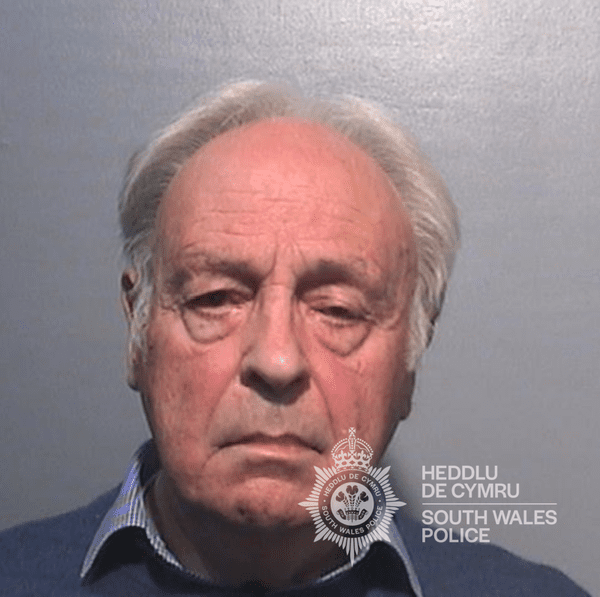
We spent quite a lot of time last year talking about the Church in Wales. But rumbling in the background of the already quite concerning scandals and crises in Bangor Cathedral and with the former Archbishop Andy John was another, older issue. Did church officials cover up a former bishop’s history of sexual abuse?
Anthony Pierce, who served as Bishop of Swansea and Brecon from 1999 to 2008, was jailed for four years last year after pleading guilty to five counts of indecent assault against a boy aged under 16 (this took place while he was a parish priest in Swansea in the 1980s). The disclosure of this abuse was made to the church in late 2023 and passed on the police the same day. But this triggered the church to dig a bit deeper into Pierce, and discover in its files there were much older reports of Pierce’s offending (including allegations about other victims) made years and years before, which had not all passed on the police. The BBC has conducted a series of investigations into the story and unearthed concerns going back as far as the 1980s.
So how did a man with a history of abuse at least partially known to the church authorities end up rising all the way to the bench of bishops? To get to the bottom of what went so horribly wrong, the church commissioned an independent review from Gabrielle Higgins, a lawyer and former diocesan secretary (chief executive) of the Diocese of Chichester, which had its own horrendous history of abuser clergy and cover-ups to deal with.
You can read the full report here, but the headline findings are that various people in the Church in Wales knew of safeguarding concerns around Pierce on four separate occasions before he was finally reported to the police in 2023: in 1993, in 1999, in 2009-11, and in 2016.
Let’s wind back to 1989 (or perhaps 1990, nobody is really sure) when the alleged abuse took place. The fact we don’t even know the year is indicative of the murkiness surrounding the details. There are conflicting reports both from Pierce himself, the mother of the victim, and from a friend of Pierce to whom the bishop later confessed. The victim has since died. But some kind of sexual encounter/abuse took place between Pierce, who was at that point a 40-something vicar in the Swansea suburbs, and a teenage boy aged 15 or 16, known only as XY in the report (in fact, everyone apart from Pierce is anonymised in the report but you can work out from context who most of the people are).
A few years later, after he had turned 18, XY told his mother what had happened. The then Bishop of Swansea and Brecon Dewi Bridges (who died in 2015) and one of his archdeacons knew something “inappropriate had occurred” by 1993 but with minimal detail. They may not known the precise age of XY when the incident occurred, but Higgins notes that at this point the age of sexual consent for homosexual activity was actually 21, and so it should have been clear that at the least what was being reported to them was against the law.
Bridges met with Pierce, who offered to resign, but this was dismissed and he continued in ministry. As late as 2009 Bridges was still claiming that the allegation against Pierce was unsubstantiated, when he must have known this was nonsense given Pierce had effectively admitted something bad had happened back in 1993. Bridges also knew back in the early 1990s that the police were looking into Pierce over an unrelated allegation of sexual abuse. But regardless, no further steps were taken and the information was essentially buried — nobody else in the diocese was told and certainly not the police.
Higgins acknowledges that at this time there was no safeguarding policy or officers in the Church in Wales, and in wider society understanding of child protection was only just beginning to emerge. But still, it’s hard not to conclude it was obviously wrong for a bishop to learn that one of his vicars had an at best ambiguous sexual incident with a teenage boy and decide no further action was needed. Even if the prospect of a criminal prosecution was low (XY at the time did not want to report anything to the police), did Bridges not think it was worth informing others in the diocese about the risk this priest may now pose to other young people they were in contact with? Apparently not.
Indeed, knowing what he did about Pierce did not stop Bridges from appointing him as one of the diocese’s archdeacons just two years later in 1995. In 1999, Pierce was elected Bishop of Swansea and Brecon. While Higgins found no evidence anyone in the church at this point beyond Bridges, the archdeacon and another retired bishop knew of the abuse of XY, there were rumours flying around of something to do with Pierce. It’s all a bit confused — Barry Morgan (at this time Bishop of Bangor, later to become Archbishop of Wales) has insisted he told the then Archbishop Alwyn Rice Jones to quiz Pierce about the rumours, and was assured it was all fine. Pierce denies he was ever asked and Rice Jones has been dead for almost 20 years, so we’ll never really know.
The upshot is that in 1999, a priest whom senior church figures knew had at the very least an unlawful sexual encounter with an underage child was elected one of the six bishops in the Church in Wales. In disgust, XY’s mother wrote to Brian James, an archdeacon in the Diocese of Swansea and Brecon (and close colleague of Pierce, who was the diocese’s other archdeacon). She wrote that Pierce had sexually abused her son while he was an altar boy and had admitted this to both her and Bridges. XY’s mother could not just be dismissed as a crank or someone with a bizarre grievance — she was a social worker with 12 years experience in child protection, and noted in the letter how abusers are skilled at building trust and ingratiating themselves into institutions, and the high risk of repeat offending.
James confronted Pierce with the letter, and the soon-to-be bishop admitted a “moment of weakness” which had led to an “improper incident”. Rice Jones was told about the letter too and might have spoken to Pierce about it, although the details are unclear. Then, a friend of Pierce came forward with a handwritten report she had written about the incident with XY. This document is mostly intended to assuage the guilty conscience of Pierce, and discusses XY and his family’s “character and background”. However, it also a de facto written admission by Pierce of the abuse and that the victim was aged only 15 or 16. This report was delivered to Alwyn Rice by hand, but the archbishop decided to simply file it away after reading. Later that year he handed it on to his successor, Rowan Williams (who would, of course, in a few years move over to England to become Archbishop of Canterbury). Williams, however, didn’t read it until much later in 2010.
Alwyn Rice decided not to tell the rest of the bench of bishops what he now knew about Pierce, allowing them to ratify his election and become Bishop of Swansea and Brecon in 1999. The original letter from XY’s mother was passed on to a senior official in the church but was then lost.
By this point the church did have a safeguarding policy, and everyone involved here seems to have ignored it, as it stipulated these sort of allegations should be referred both to the church’s child protection officer and the statutory authorities. It seems part of the problem was that the reports and rumours about Pierce got muddled (deliberately or accidentally), and many of those in possession of some of the facts came to believe this was about Pierce being gay, not Pierce sexually abusing a child.
As the archdeacon who received the letter in 1999 later told a colleague, most in the church at the time “regarded this event as a bit of a hiccup and as evidence of homosexuality not paedophilia and that this was a blip and that it should be put to one side”. Williams told Higgins it must all be understood within the “don’t ask, don’t tell” culture that had developed.
This is a perennial issue for lots of churches, including the Church of England. The rules/doctrine officially prohibit homosexual behaviour, but it’s widely known and accepted that many clergy are in fact gay and many (perhaps most) bishops are very relaxed about ordaining and appointing gay vicars, provided they can be discreet. Nobody can ever openly talk about this, though, and so all same-sex relationships are carried on behind closed doors. And so consenting sex between a de facto gay couple in the church gets conflated with or glosses over really concerning same-sex abuse. As Higgins puts it:
“It seems doubtful that allegations of sexual activity, with the admission of an improper incident, involving an allegedly 15-year-old girl would have been put to one side in the same way. The approach seems to have been driven more a reluctance to inquire into homosexual orientation, blinding recognition of child sexual abuse.”
Fast forward to 2009. Pierce has retired, and the Church in Wales is commencing an historic cases review: a trawl through past safeguarding issues through the new more informed lens of the 21st century. Bridges, the also retired former bishop who first received reports about Pierce in 1993, somewhat reluctantly passes on what he knows to the current Bishop of Swansea and Brecon John Davies (who would a decade later also become Archbishop of Wales). But he fudged it, describing XY as a young man rather than a legal minor aged 15 or 16 at the time, and he also tells Davies the claims were “unsubstantiated”. This is on the face of it just a lie: Bridges had spoken to Pierce about it and knew full well that at the very least Pierce admitted something sexual had transpired between them and that it had been wrong. James, the archdeacon who had got the letter from XY’s mother in 1999, also passed on something of the tale to the historic cases review team, but again missed out salient points.
But Davies initially decided not to tell what he now knew about Pierce to the historic review team in 2009, only fessing up when prompted directly by the official who was collating this work a year later. Davies is criticised for not disclosing this by Higgins. He defends himself saying he had been told repeatedly the allegations were unsubstantiated and had been dealt with, and did not want to pass on vague information which might damage another person’s ministry. But, Higgins has little time for this.
Williams, by this point approaching the end of his term as Archbishop of Canterbury, also did not pass on anything re Pierce to the historic review team. But although he’d been given the 1999 report he hadn’t read the 30-page handwritten document and had no idea the allegations involved anything criminal or a child; he most likely thought it was something about Pierce’s sexuality. Higgins, fairly in my view, decides he hasn’t done anything wrong here, he just didn’t know anything to report on.
In early 2010, the Church in Wales hires the independent person doing the historic cases review to become their first church-wide safeguarding advisor. She, it happens, is also a personal friend of XY’s mum and they have a conversation about what happened between XY and Pierce. XY has since died, but his mother remains furious that not only was her son’s experience downplayed in the 1990s but that Pierce went on to be made a bishop despite her 1999 letter trying to blow the whistle on him.
The safeguarding advisor then chased Davies and he finally did pass on what he had gathered about Pierce to her. However, XY’s mother had insisted her and her son’s names be kept out of it. This safeguarding advisor had also received a somewhat confused report by another archdeacon that Pierce had made an inappropriate sexual advance to a student while he was a university chaplain in the 1980s, although this was later partially retracted. To further confuse matters, the person reporting this to the archdeacon was himself a convicted child sex offender serving a jail sentence.
The church’s safeguarding panel convened in April 2010 and agreed Pierce should have his permission to carry out retirement ministry withdrawn and that he be told to resign from any voluntary work with children. He would also be referred to the Independent Safeguarding Authority, which was a government vetting service and the predecessor of today’s Disclosure and Barring Service. But they decided not to report him to the police, after taking informal soundings and being told that without a living victim or other first-hand evidence, the police would not investigate.
However, things changed a few months later when the 1999 report (that’s the document written by Pierce’s friend ostensibly trying to minimise his abuse, but which also included his admission of unlawful sexual contact with a minor) was sent to Barry Morgan, then Archbishop of Wales, by his predecessor now sitting in Lambeth Palace, Rowan Williams. This prompted a change of heart and a formal report to the police. But, tragically, lots of very relevant information was not passed on (including the fact XY may have been 15 rather than 16 at the time and the fact Pierce had admitted criminal conduct, let alone his rumoured links to other child sex offenders). The police interviewed XY’s mother, and decided there was no current concerns and let the matter lie.
Regardless of the police’s inaction, the review makes clear it was a bad error not to initially pass what the church now knew about Pierce to the authorities just because they feared nothing would result of it. For all they knew, the police may have other evidence already on file about Pierce, or indeed this report could sit on file to be used later on to corroborate other allegations.
Around this time the safeguarding advisor was finally removed from the case due to her conflict of interest (being friends with XY’s mother). Higgins is sceptical if this is truly the reason she was shuffled off, given everyone had known about her conflict of interest for months without expressing concern about it. And while it was a not unreasonable decision on the face of it, it left the church without any serious professional leadership on the Pierce case.
In 2011, the Independent Safeguarding Authority (ISA) decided not to put Pierce on the national barred list, and so his PTO (permission to officiate) was reinstated by Davies in the Diocese of Swansea and Brecon. The ISA basically didn’t have enough info from the church to bar Pierce, not because Pierce was innocent of course but because the church hadn’t actually carried out a meaningful investigation or disciplinary procedure. But the church got things backwards — rather than taking the ISA’s non-barring of Pierce as a reminder to look into him more fully, they seem to have interpreted it as a kind of clearing of his name, so he was safe get his PTO back.
In a letter to Pierce telling him he could resume retirement ministry, Davies was apparently quite friendly and even apologetic for having been reluctantly forced to withdraw PTO the previous year. Davies justified this to Higgins by explaining at this point in 2011 he had a lot of respect for Pierce’s ministry and “no inklings of any shady past”. This is objectively untrue, as Davies knew Pierce had already admitted to an improper relationship.
There the matter lay for five more years until it re-emerged during the Independent Inquiry into Child Sexual Abuse, which had a whole strand examining abuse within the Anglican churches in England and Wales. When IICSA asked for all details about Pierce’s case in 2016, it was realised he still had PTO in the Diocese of Swansea and Brecon. This led to the 1999 report being re-discovered in a dusty envelope on a shelf in the office of the church’s head of resources.
Pierce’s PTO was duly revoked again, and the necessary referrals made to the police and social services. The police, once again, decided without a living victim or witness any investigation was pointless and closed the case. Later that year Davies (who was shortly to become the next Archbishop of Wales) wrote to Pierce, who had been given special permission to preside at a service to mark 50 years since his ordination, in very friendly terms. He apologised for not being able to be at the anniversary service personally, but said he would be happy for it to be publicly noted that he sends his good wishes:
“The diocese and the Church in Wales have a huge amount for which to be grateful to you, and I do hope that your celebration, albeit on a smaller scale than any of us might have wished, goes well as a thanksgiving for your faithful ministry.”
The pretty clear vibe is of a bishop who has reluctantly decided to hold a former, well-liked colleague at arms length for some tedious PR and HR reasons, but wants said colleague to know he still thinks he’s a jolly good chap all things considered, despite that unfortunate peccadillo from years ago nobody wants to talk about.
This is the point at which the review ends. So what have we learned?
Higgins has some formal recommendations about how the Church in Wales appoints bishops, which all seem fairly sensible. Things like making all the candidates for election be vetted by the director of safeguarding in advance, and giving some body or individual the power to veto someone’s name going forward if something of concern is discovered. Nevertheless, even if all these and more had been in place in 1999, Pierce would still have become a bishop. Back then, his own bishop knew about the allegations and made him an archdeacon. The then Archbishop of Wales knew about the allegations and confirmed his election as bishop. Pierce even offered to withdraw his name from consideration, but this was rejected. Fundamentally, it was human not system failures which allowed an abuser like Pierce to rise through the ranks.
The rest of Higgins’ recommendations are fairly obvious. It’s stuff like safeguarding training for everyone, including diocesan and national church staff, allowing safeguarding officers to make referrals to the police and others without first getting sign off from others, better database management around PTO and when it is withdrawn, assigning a lead caseworker to each safeguarding case, having a proper conflict of interest policy. The kind of stuff you really would have hoped an institution like the Church in Wales had already had in place for at least a decade.
The current Archbishop of Wales Cherry Vann has offered her apologies to all those failed by the church in the past and victims of church-related abuse:
“The review shows in painful detail the missed opportunities, the harmful assumptions and the inadequate processes which characterised the church’s response to these allegations of abuse for far too long. This catalogue of failures can only be a source of shame for the church and will have caused further trauma to abuse victims and their families.”
Safeguarding procedures have massively improved since the era covered by Higgins’ review, Vann added, but there was “no room for complacency”. She also said she welcomed the review’s recommendations and would implement them all.
One immediate consequence has been that Davies, the former Bishop of Swansea and Brecon and later Archbishop of Wales — much criticised for his inaction and inappropriately chummy letters to Pierce by Higgins — no longer has PTO. A spokesperson for the Church in Wales confirmed reporting by the news website Nation.Cymru that Davies did not have permission for retirement ministry, although they did not specify if this was specifically withdrawn in response to Higgins’ report.
This is not the only similarity to the Makin review into the John Smyth abuse scandal across the border in the C of E (whose aftermath has also been dominated by efforts to enforce some kind of belated accountability to various clergy named in the report). Once again we have an infuriating story in which someone manifestly not fit to exercise ministry in the church surviving, and even thriving, despite several senior figures knowing at least part of what they had done.
Of course what Pierce did is very different to Smyth’s vicious beatings in his garden shed, but it is still sobering to read about how many otherwise well-meaning Christian leaders brushed such wrongdoing under the carpet. How is it that people who would no doubt be horrified to be confronted directly with child abuse, when approaching it indirectly through a colleague in ministry keep on finding ways to minimise and downplay it? To the extent they end up somehow colluding in helping an abuser to rise through the ranks almost unchallenged.
There’s lots here to unpick about deference and perhaps even British politeness in not wanting to pry into another chap’s private business. There’s definitely a major theme in the “don’t ask, don’t tell” culture around homosexuality which cripples attempts to hold gay clergy to account for sexual misconduct. There was a strong sense from reading Higgins’ report that a series of liberal-minded bishops and others felt like their secretly gay colleague Pierce needed protecting from his ambiguous same-sex relationships coming to overshadow his ministry. And failing to appreciate that what was under the microscope here was actually an episode of abuse.
But the other strong theme is of more mundane, even banal, institutional failures. When the story reaches the modern era from about 2009 onwards, you don’t get blatant cover-ups (although for sure some of Pierce’s mates clearly wanted to downplay the incident). But you do get a slew of crossed wires, disclosures missing critical information, lost documents, misunderstandings and more. There are several people clearly a bit paralysed with indecision; recognising they probably shouldn’t just ignore this case and yet unwilling to grasp the nettle and take the initiative/responsibility. Lots of meetings, lots of emails but a lack of decisive action.
You hope that this is partly a product of the time, when we were coming to appreciate the gravity of safeguarding and yet lacked well-embedded cultures and policies about how to handle it. But, to be honest, you still see some of the same stuff even in more recent church scandals and cock-ups over abuse. Yes, sometimes bishops do literally try to sweep their friends’ misdeeds under the rug. But just as often, if not more likely, it’s bureaucratic mishaps and institutional paralysis to blame. And it’s not obvious what we should do about that.
Not a fair fight
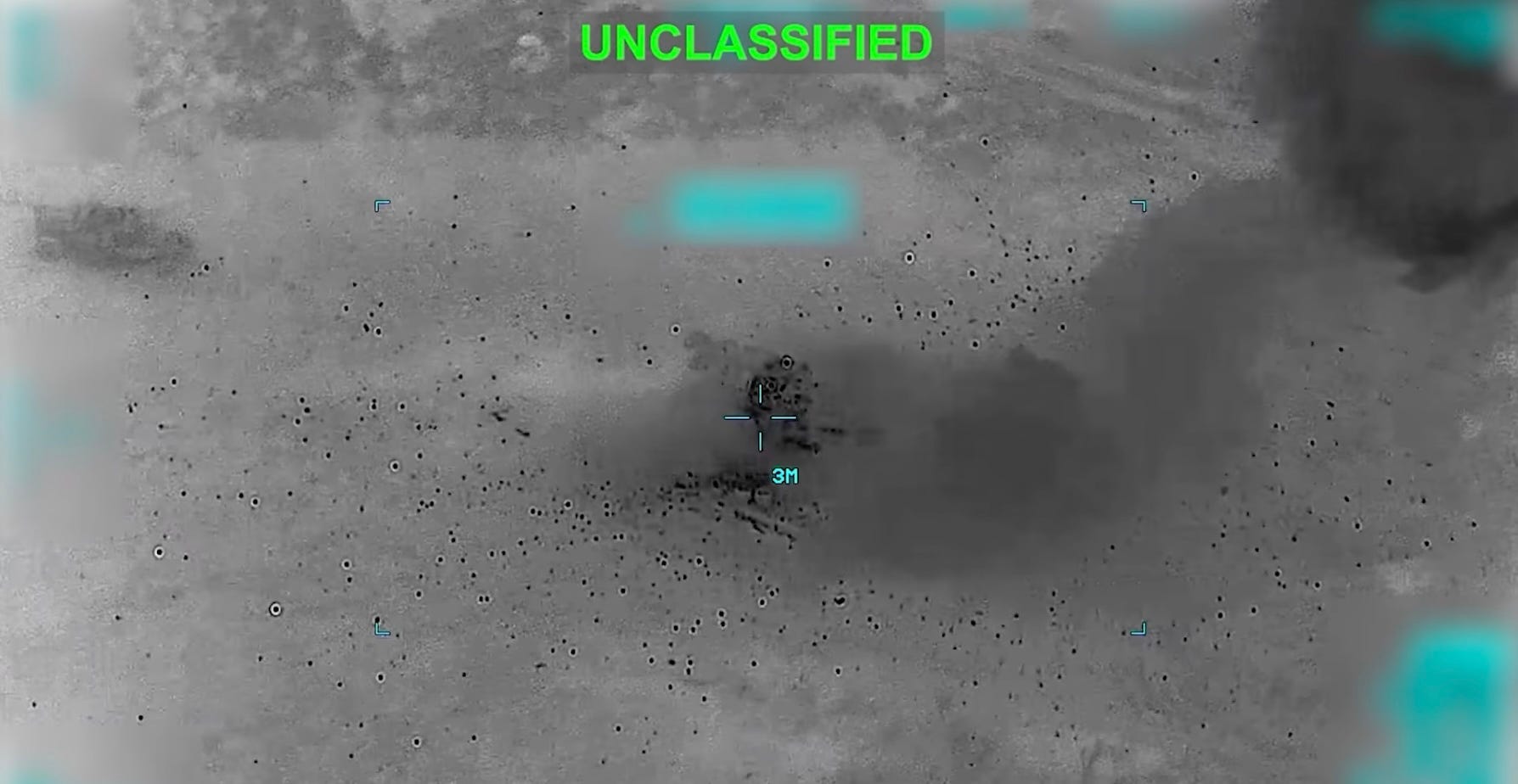
There aren’t tons of church news lines on the war now raging in the Middle East between America, Israel and Iran (and increasingly drawing in many other nations too). But several leaders have had their say, notably the Bishop of Chelmsford Guli Francis-Dehqani. She fled the Islamic Revolution in her homeland in 1980 as a teenage refugee, after her brother was assassinated and her wider family targeted for death (her dad was the Anglican bishop in Iran).
She told the BBC as the American airstrikes began that she hoped the UK would learn the lessons from Iraq and not get too involved. She also expressed deep scepticism about the motives for launching the war, dismissing claims from the US and Israel their bombardment was a pre-emptive attack:
“If you look at it coldly, this was an unprovoked attack on Iran. I know that Israel and the United States said that it was a pre-emptive attack, but it’s difficult to see. Pre-emptive against what?”
She was not shedding any tears over the potential end of a brutal, repressive Islamist regime which had oppressed the Iranian people for over 30 years, she added, but there were of course very “mixed emotions” as “total horror and destruction” were “rained down” on her homeland.
In a separate statement, Francis-Dehqani said the tit-for-tat airstrikes and missiles had brought “a new wave of fear, uncertainty and in many cases devastation to the people of Iran and the whole Middle East, with more nations and people now being dragged into the conflict”.
“While the regime in Iran has done profound harm and is deeply unpopular, and while there will be some renewed hope for change, it is not at all clear where military intervention from the US and Israel will ultimately lead.
“I thank the Archbishop in Jerusalem for his letter to Christians this weekend and echo his call for us to pray for the protection of the innocent and for wisdom and sound mind for the political leaders whose decisions have brought about this profoundly dangerous situation.”
That Archbishop, Hosam Naoum, who leads the Anglican church in Israel, Palestine, Iran and the rest of the Middle East, issued a pastoral letter on the weekend which lamented how the “cycle of violence” had once again ratcheted up. America and Israel attacked without provocation Iran (and later, Lebanon), and in return missiles and drones from Iran have now rained down on Bahrain, Kuwait, the United Arab Emirates, Israel, Jordan, Qatar and more (sometimes targeting American bases, sometimes just shooting into luxury hotels or oil infrastructure).
“Suddenly, our people from the Mediterranean to the Persian Gulf find themselves once again huddled in shelters, fearing for their lives as the shadow of a total regional war looms over us.”
He urged Christians everywhere to pray for God’s protection of the innocent victims caught up in the war, and for Christian leaders to speak not for “regime change rhetoric or military ultimatums”, but of their hope in the Prince of Peace. He added:
“We pray specifically for a 'sound mind' for the leaders of the United States, Israel, and Iran, that they might recognize the futility of this bloodshed and turn back from the precipice of a global catastrophe.”
Not every Christian has taken the same stance on the conflict, though. There have been some bizarre and troubling reports coming out of the United States that some military commanders have told troops preparing to fight in the war against Iran that they are taking part in a Biblically-mandated apocalyptic conflict which will trigger Jesus’s second coming and the rapture. A religious freedom advocacy group says it has received more than 100 anonymous complaints from soldiers concerned their officers have got wrapped up in Christian Nationalist millenarian theology.
Certainly the openly Christian Nationalist defence secretary in the US, the former TV personality, thrice-married serial adulterer and alleged rapist Pete Hegseth, is revelling in the chaos his armed forces are unleashing in Iran. At a briefing he told reporters America was sowing “death and destruction from the sky, all day long”:
“I stand before you today with one unmistakable message about Operation Epic Fury: America is winning decisively, devastatingly and without mercy. We are only four days into this, and the results have been incredible — historic, really. Only the United States could lead this. But, when you add the Israeli Defense Forces — a devastatingly capable force — the combination is sheer destruction for our radical Islamist Iranian adversaries.”
The conflict was intended to “unleash American power, not shackle it,” Hegseth later said:
“This was never meant to be a fair fight, and it is not a fair fight. We are punching them while they’re down, which is exactly how it should be.”
Hegseth, despite his somewhat chequered past, is a member of a church connected to the influential hardline Christian Nationalist evangelical pastor Doug Wilson, who has built an empire preaching an extreme conservative gospel. Wilson’s church argues that women should not only be barred from the military Hegseth now leads, but should lose the right to vote, and is part of the Christian Reconstructionist movement which calls for America to be governed solely by Biblical law as an explicitly Christian nation (and let’s not even get started on Wilson’s views about slavery and the civil war).
The Pope, on the other hand, has also called for peace, saying during his traditional Sunday address from the Vatican that stability could not be built via threats, weapons, death or destruction, but only from “responsible dialogue”:
“Faced with the possibility of a tragedy of enormous proportions, I address to the parties involved a heartfelt appeal to assume the moral responsibility to stop the spiral of violence before it becomes an irreparable abyss!”
The Catholic persecuted church charity Aid to the Church in Need has warned another spiralling Middle Eastern conflict could also threaten the already extremely vulnerable Christian minorities across the region. The charity’s executive president said it was essential Christianity did not die out in its birth place:
“The longing for freedom and dignity among peoples in the region is legitimate. But the price of renewed war would be extremely high. Civilians always suffer most, and Christians are often among the most defenceless.”
Closer to home, the former Archbishop of Canterbury Rowan Williams has dismissed the idea the war on Iran could be considered “just” in the Christian moral tradition. He told the Church Times Iran did not need more missiles raining down, nor some sort of “covert annexation designed to serve geopolitical manoeuvring”:
“The real urgency in Iran is for a new political order that responds to what Iranian people are actually hoping for themselves — not a puppet government, not a military protectorate. Where is the work being done to make this more imaginable? There are substantial Iranian groups, inside and outside the country, looking towards a democratic future. Their voices need to be listened to.”
Christian Aid has also reported its local partners in Palestine, Lebanon and Israel are finding it harder and harder to deliver essential humanitarian aid and relief work due to the conflict. Their chief executive said:
“Innocent civilians are paying the price for international political failure in the Middle East. As an advocate of international law, the UK Government must reject the ‘might is right’ approach to politics, and work to secure an immediate ceasefire so that humanitarian aid can reach those most in need.”
0 for 6
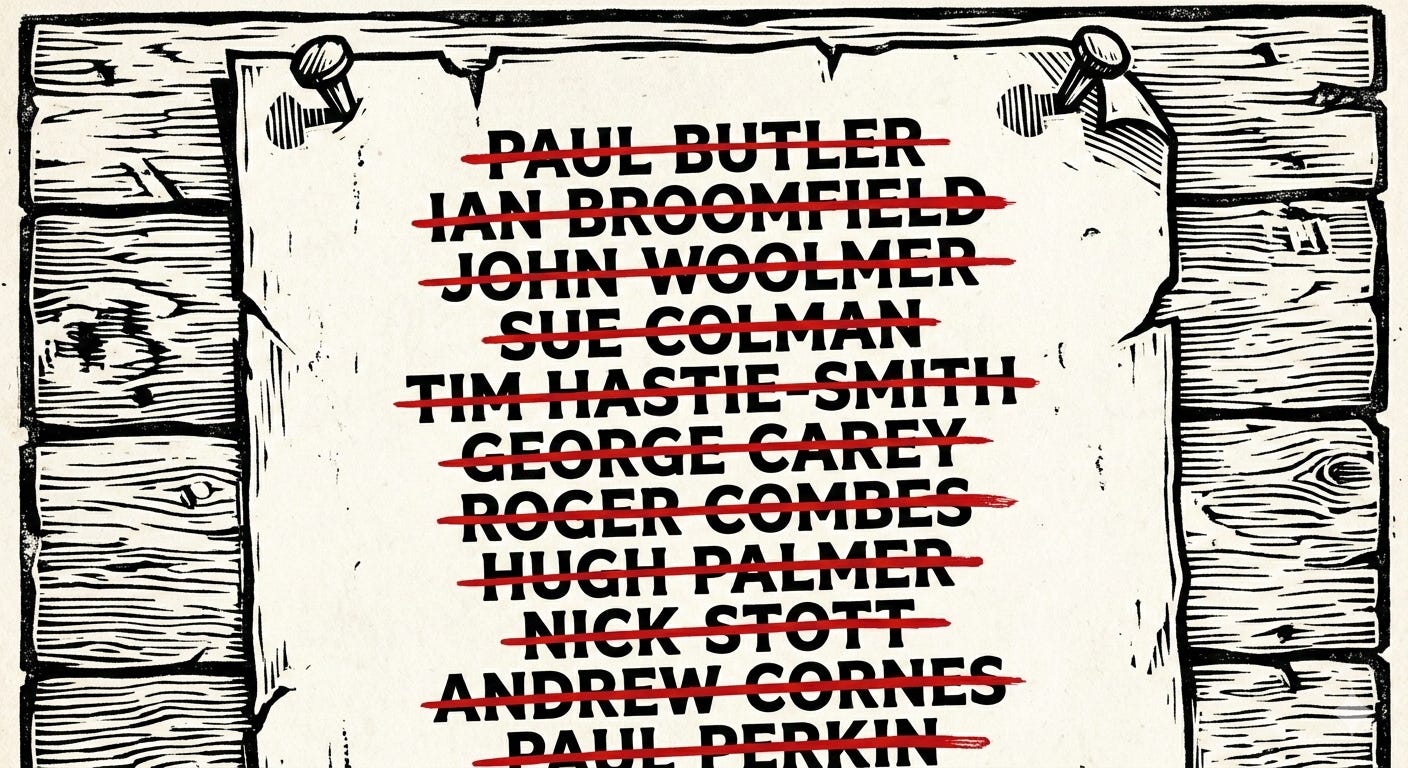
I mentioned in passing earlier the aftermath of the Makin review. You may recall that after an in-depth review of the evidence that report dug up, 11 clergy were formally charged with disciplinary complaints by the C of E’s national safeguarding team (NST). Notably not among them was Justin Welby, whose misdeeds — while apparently serious enough to warrant his resignation — did not cross the threshold for disciplinary action.
It’s never been made clear why these 11 names were the ones the NST landed on, and lots of them seem (at least to me) to only have had fairly tangential connections to the Smyth story. We’re not talking primarily about the core group from the 1980s who wrote up a detailed report on his abuse and then decided to keep this knowledge only within a tight evangelical circle, leaving Smyth free to start again in Zimbabwe.
The uncomfortable reality for the NST is that of those 11 people they pursued, six so far have been cleared. The latest is John Woolmer, a vicar who led the Christian student group at Winchester College (the elite public school near Smyth’s house, where the abuser groomed many of his victims). Woolmer, Makin uncovered, was told by someone in the early 1980s that Smyth was involved in something bad to do with abuse. Woolmer, however, believed this conversation was bound within the confidentiality of a confessional interaction and never told anyone else about it. The C of E’s top judge has now ruled on the disciplinary complaint filed against Woolmer, deciding the cleric had no case to answer and that the evidence presented did not meet the threshold for misconduct.
So that makes the NST 0 for 6: of the original 11 cases they triggered, six have been resolved thus far and all six have been chucked out by the church’s judges. It may well be they secure convictions for the other five cases, but overall it’s not a great look. More than half of those the church’s national safeguarding experts think should be held to account for their Smyth-related misdeeds not only haven’t been convicted, but haven’t even gone to a tribunal hearing but had their cases summarily dismissed by the judge.
This is only going to pour more fuel on the fire for those who fear this whole process is a witch hunt. Is the national church so bruised by the anger over Makin that they are casting around for someone — anyone — to blame? Most of those who did know the details of what Smyth was doing in the 1980s and could have blown the whistle (but didn’t)… well, most of them are dead now and beyond earthly justice. It’s hard not feel we might be landing upon some people way down the food chain and only tangentially involved simply because they are alive and available to pursue through the church’s courts.
Rediscovering evil
Both the Old and New Testaments are quite clear that bad things are not simply the result of bad choices by free human beings. There are also personal, malevolent, demonic forces at work, and our lives as followers of Jesus are caught up in cosmic spiritual battles. And yet while we may pay lip service to this, many Christians live as functional materialists, finding talk of Satan and spiritual warfare all a bit confusing and distasteful. In this episode we explore why it is some streams of Christianity have lost sight of the reality of spiritual evil, and how recovering this theology might help us better live faithfully and wisely in our present age.
Quickfire
You might remember last summer a story about young boys who were drugged while on a Christian summer camp in Leicestershire. Jon Ruben, the camp leader, has now been sentenced to 23 years and denounced by his wife as a “sadistic, monstrous paedophile”. The court heard how Ruben used the “cloak of Christianity”, posing as a respected church figure while actually lacing sweets with sedatives so he could sexually assault children at the camp without others in the dorm waking up. The judge said Ruben had used his position within a local church — where he was even named as safeguarding lead — to win locals’ trust to send their children to his camp for years. The full extent of his crimes may never be known, the police have said.
The people have spoken, and Carlisle Cathedral’s east window has been officially named the nation’s favourite stained glass window after a poll run by the Association of English Cathedrals. The interim dean of the cathedral said: “The combination of the ancient glass at the top and the wonderful Victorian depictions of Jesus’ life, all set beneath our starry ceiling means you truly get a glimpse of heaven inside the Cathedral.”
The Armenian government has continued its crackdown against the country’s Apostolic Church, first barring the church’s leader Catholicos Kalekin II from attending a church assembly and later beginning a criminal investigation into the prelate. The dispute between church and government has been rumbling for years now, and has included Armenia’s prime minister accusing the celibate Kalekin of secretly fathering a lovechild. The church has attacked the government for giving up too much in post-war negotiations with Muslim-majority Azerbaijan, who won a short war over the contested region of Nagorno-Karabakh in 2020. The ancient church has been the de facto national religion of Armenia for millennia, but was forced to hold its annual assembly outside the country due to government harassment and interference.
The former vicar David Tudor, who was at the centre of a major row involving the Archbishop of York Stephen Cottrell, has been banned for life for a second time by the C of E. Tudor had previously admitted abusing two girls in the 1980s leading to a lifetime ban from ministry in 2024, but has now been found guilty by another tribunal of a separate case of grooming and sexual abuse of a 15-year-old girl, also in the 1980s. Tudor was briefly banned for five years in the 1990s when this case originally happened, but was then disastrously let back into ministry and was still in post under Cottrell when he was Bishop of Chelmsford in the 2010s.
The Vatican has declined the opportunity to take a seat on Donald Trump’s new vanity rival to the UN, the so-called Board of Peace. The board was initially set up to administer Trump’s plan to rebuild Gaza, but has since evolved into a larger-scale international peacekeeping and resolution body (or at least in theory, I doubt it will actually do or achieve anything in practice). The Vatican said it would not join the board because a) it wasn’t a nation state like the others, and b) it did not support anything which would undermine the actual UN.
A medieval church has replaced its traditional bellringers with a high-tech automated system. St Sampson’s, in Cornwall, has not had its bells rung for half a century and they have become too fragile for the normal rope-pulling method. Instead, electric clappers have been installed inside the bells which can be controlled using a £30,000 touchscreen system, to play any number of preset peals.
The Bishop of Guildford Andrew Watson has died from pancreatic cancer, just a matter of weeks after he was first diagnosed. Last week Watson announced the disease was so advanced and untreatable he would have to immediately stand down. Shortly after an all-day prayer vigil at Guildford Cathedral attended by thousands, and a personal pastoral visit from the Archbishop of Canterbury, Watson died on Tuesday surrounded by his family.
The C of E’s controversial Project Spire slavery recompense scheme has been endorsed by the head of the Anglican Church in the Caribbean. Archbishop Philip Wright said the church had to move beyond symbolic apologies to actual reparative justice if it wanted to maintain its gospel witness. Wright also praised the mission agency USPG’s own project to atone for its shameful history of owning a literal slave plantation for over a century.
A Christian social worker who lost a job offer over his Christian-inspired views about homosexuality has had his case reopened on appeal. Felix Ngole first hit the headlines when he fought and won a legal battle against the University of Sheffield which had wanted to kick him off his social work course because of his trenchantly socially conservative opinions expressed in a Facebook post. Years later a job offer from a social work agency was rescinded after they found out about his history and feared employing him would harm their reputation. Ngole lost his employment tribunal over this in 2024, but has now won an appeal which ordered the tribunal to reconsider his case.
UCKG, a Brazilian-founded international evangelical megachurch network, has come under renewed scrutiny over its aggressive fundraising methods among congregants. The Guardian reports on members who felt pressured into handing over their entire life savings to the controversial church, and said the Fundraising Regulator had on several instances told the church it should repay the donations. UCKG has previously been accused of coercive cult-like activity, as well as misleading prosperity-gospel style claims.
Thanks for reading, please do carry on sharing The Critical Friend with others you think might enjoy it. And I would also be very grateful if you could become a paying subscriber too: for just £5 a month you can help sustain my independent church journalism, and also get access to the comment section, past editions of the newsletter, and occasional bonus material too.
Any chance of a change from the endless and appalling stories if sexual abuse in the Anglican Church? There must be some good things happening.
For an assessment of the 'War in Iran will lead to Armageddon, see here: https://www.psephizo.com/biblical-studies/is-the-war-in-iran-the-start-of-armageddon/