

Hello! We’ve all been talking a lot about Christian Nationalism in recent years without having a clear grasp on what it means. Now, ground-breaking research has shone a light on what the British public really think about the relationship between Christianity and Britishness, and the results are fascinating, possibly encouraging, but certainly revealing.
The Church of England’s bad run of luck with safeguarding complaints continues, after someone who’s not even become a bishop yet falls under suspicion.
And someone who’s about to stop being a bishop in Scotland still has just enough time to go one more round with her implacable diocesan antagonists.
Then there’s our latest podcast (What should Christians make of the death penalty?), and the usual list of links to interesting church news stories at the bottom, including tree snails and soft plays in parish churches, why the world’s most populous Muslim nation produces tons of Catholic priests, and has someone found Noah’s Ark on a Turkish mountaintop?
Defining Christian Nationalism
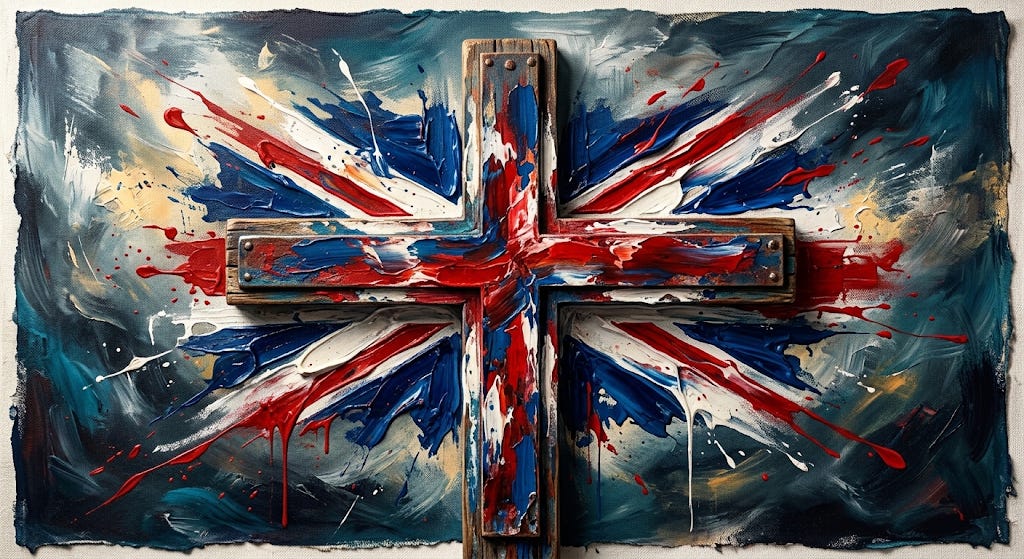
I have to be honest: when I started writing this newsletter almost three years ago, I basically zero expectation we’d ever end up discussing Christian Nationalism (except perhaps to roll our eyes at the American version and shudder). And yet without anyone really expecting it, that has become one of the major talking points of this current moment in British church life too.
We can all point to examples of what we think we mean when we say Christian Nationalism, but there has been precious little consensus or clarity who British Christian Nationalists are and what they actually believe. Peter Lynas from the Evangelical Alliance made an interesting stab at delineating four different kinds of Christian Nationalism, depending on whether the ‘Christian’ bit or the ‘Nationalist’ bit was emphasised, back in 2025.
There’s also been oceans of ink spilled about to what extent figures like James Orr (the Cambridge theologian who now writes Reform’s policies) or Danny Kruger (the ex-Tory MP who gave a significant Commons speech about England and faith) encapsulate modern British Christian Nationalism (I’m getting a bit bored of typing that and it’s going to come up a lot, so from here on let’s just say CN). Conversely, another theologian (Oxford’s Luke Bretherton) recently told the bishops of the Church of England that, theologically-speaking, there wasn’t really any such thing as CN.
Now, the thinktank Theos has made a huge contribution to the debate by publishing some original research into the subject. Their report begins by noting the almost total absence of academic study into CN in Britain (in contrast to the United States where it is both more prominent and better examined). And so Theos commissioned a pollster to survey nearly 11,000 across six European countries including the UK. The British sample was 1,765 folk and their data informed this report (there will be other research published later on the findings from the other countries).
They then did some technical statistical work on this data (a Principal Component Analysis and a Latent Class Analysis for the nerds) to statistically group the respondents into clusters. Theos correctly identified that CN is not a label people just opt into or out of, nor can it be simply fitted along a spectrum with the most Christian Nationalist at one end and the least at the other. And so they sought to tease out from their survey data different (and somewhat overlapping) categories of respondent who had distinct approaches to the melding or separating of their Britishness and Christian faith.
But first, they did also try to boil down CN into a single yes-or-no question to get a simple answer: ‘Do you need to be Christian to be truly British?’ Some 17% agreed either strongly or slightly with that. They got similar numbers when flipping the question around: ‘Do people who don’t have Christian values truly belong to our nation?’ About 16% agreed with that suggestion. So perhaps in the region of 15-20% of Britons are CN in that sense. But when asked to select things from a list what was the most important factor in making someone British, only 1% picked being a Christian.
Putting that to one side, Theos then dived into its fancy cluster analysis. It first identified the two major alternative perspectives and pleasingly these divided pretty much exactly half and half. Fifty per cent of the population are Separatists: people who think Christianity and Britishness should be kept apart. And the other 50% are Integrationists, people who think in some way there is overlap between the faith and the nation.
The Separatists they broke down further into two camps. The first they called Committed Separatists. These amounted to 34% of the population. They reject any suggestion that Christianity might be integral to being British, they don’t want faith in politics, they don’t care if a local church was turned into a mosque, and they care even less that Christianity is in decline in the UK. This group is slightly more likely than average to be younger, female, better educated and from a higher social class. They are also less religious in personal affiliation and practice than average, but do still include some believers (23% describe themselves as Christians and 13% say religion is important to them).
The second camp is what Theos are calling Cultural Separatists (16% of the population). They hold similar views about the separation of church and nation/state as the first group, although often with less intensity. Lots of them are noncommittal on some of the statements the Committed Separatists had strong views on. The key difference is that unlike the first group, they’re not airily and dispassionately neutral about other religions taking root in British soil. They absolutely would be unhappy if their local church was turned into a mosque and they are much more strongly anti-immigration. You might assume this group is the more working-class, socially conservative, whiter version of the urbane metropolitan liberals of the Cultural Separatists. But Theos say their data shows there aren’t major differences in gender, income, work status or where they live between the two categories of Separatists. They are a bit older and a bit lower down the socio-economic ladder, and yes, a bit more likely to be white and more Reform-y than Green. They are generally more negative, disillusioned, isolated and have a more cultural rather than civic sense of what makes you British.
These Cultural Separatists are obviously not Christian Nationalists by any stretch and want no entanglement between faith and state, and yet they are also the constituency the popular imagination believes CNs are drawn from. As Theos note:
‘Their view of the nation is more traditional, more settled, more natal, more cultural and in some instances more ethnic, and even though they don’t want Christianity to be part of that, they are hostile to the idea that any other cultural or religious identity – most obviously Islam or immigrant identities – should occupy that space.’
Now we come to the other half of the spectrum: the 50% of the population who in some way are OK with an integration of Christianity into nationhood and Britishness. These Integrationists are divided into three sub-categories.
The first are Values Integrationists (26% of the sample). They are still pretty negative about true CN, having no time for the idea you need to be Christian to be truly British or that we need more Christians in political leadership. But they are in favour of Christianity having an influence on the cultural elements of British life, informing our RE lessons etc. They share a lot of the concerns about modern Britain that Cultural Separatists have and worry about immigration and the number of Muslims. But unlike them, Values Integrationists see Christianity as one aspect of Britain they want defended from these threats, albeit not in an especially muscular fashion compared to others we will explore in a moment. Nor are they driven by the sense of alienation or disaffection in the same way as Cultural Separatists: they are much happier and integrated into their communities and feel proud of their nation. Compared to the sample average, however, they’re not much more likely to have a Christian affiliation, go to church and say religion is important to them. In short, these are the soft, cultural CNs:
‘For Values Integrationists, Christianity is a value-based phenomenon, which has pervaded Britain’s history, culture and institutions, which has done it good and which is worth protecting, although not necessarily defending vigorously.’
The next slice are Identity Integrationists (11% of the sample). They are the hard core CNs, who think Christianity and Britishness are close to coterminous. They overwhelmingly believe Christianity should be favoured by the state, that the prime minister has to be a Christian, that laws should be based on Christian values. Strong majorities also believe you have to be Christian to be British. This category also has the most distinct demographic profile, being noticeably more working class, less urban, more white, and older than the population average. They are very anxious about high levels of immigration, the presence of Muslims and asylum seekers, crime, and indeed threats of almost any kind to the nation (whether from compulsory ID cards, Russia, public debt or trans people). This group is also most likely of any to say they are Christian and that religion is important to them. Despite this, their self-professed levels of churchgoing are barely above the average (13% vs 11%).
‘Identity Integrationists are deeply, indeed viscerally, culturally Christian, but their Christianity tends to be a bit more cultural and heritage based than it is practising.’
They are also intensely nationalistic on every metric, not just when it comes to Christianity, being proud of pretty much every version of Britishness offered and also demanding the highest bar of any group to count as British. They are also the most racially-driven: almost half agree that being white is important to being truly British and 84% say Britain is too ethnically mixed.
The fifth and final sub-category are Belief Integrationists (13% of the population). They share, without quite the same intensity, the Identity Integrationists’ desire to see Christianity embedded into Britishness and significant chunks of this group think those who aren’t Christians cannot be truly British. Where they begin to differ is what they think Christianity is. The Identity Integrationists majored on defending Christian heritage and keeping Britain a Christian country. The Belief Integrationists don’t really care much about that. Instead, they were more likely to believe being Christian meant caring for asylum seekers, and were also much more likely to attend church, read the Bible and pray. These are CNs who feel this way because they are actually practising Christians, not cultural ones, and they don’t want to preserve Britain’s Christian identity so much as promote it. They’re much less worried about immigration and the numbers of Muslims, and a bit less concerned about the decline in churchgoing.
Belief Integrationists are a bit younger and less white than average, a bit more urban and likely to be earning less. They’re also the group most likely to be personally contented and integrated into their communities, and intriguingly the most likely of any group to say Britain’s social problems are down to ‘feminism and erosion of traditional masculine values’. Their nationalism is often just as punchy as the Identity Integrationists (they are in favour of ‘strong man’ politicians prepared to break the rules, for instance), but less racialised. That said, two-thirds of this group believed in the Great Replacement conspiracy theory (the idea that elites are deliberately flooding Europe with Muslim migrants to replace its indigenous White inhabitants).
Phew. OK, that was a lot of information. Let’s try to recap briefly. Theos has found Britain is basically split down the middle, with half the population wanting to keep Britishness and Christianity separate and half wanting them to be integrated in some way.
Of the Separatists, there are:
Committed Separatists (34%) — hardcore secularists who want a total firewall between church and state. Broadly impartial about faith as long as it’s private.
Cultural Separatists (16% — also anti-CN, but driven more by cultural antipathy towards any religion taking root in British soil. More likely to be white and working class.
Then of the Integrationists, there are:
Values Integrationists (26%) — soft CNs, like Christian culture and heritage and want it to somewhat determine Britishness, but not too much.
Identity Integrationists (11%) — hardcore CNs, think Britishness and Christianity are intrinsic to each other, hate migrants/Muslims, vigorously nationalistic in every way. Typically the white, working-class, older, rural pool in which Reform is fishing.
Belief Integrationists (13%) — strong-ish CNs, but driven more by actual practising faith and desire to promote Christianity. Bit younger, more diverse.
This little survey underlines the complexity of the debate. It’s just not very useful to talk about ‘Christian Nationalists’ as a single category, as beliefs and practice vary widely within those who might in some way be classified as such. The way each category maps onto nominal or practising Christian faith is also worth pausing on.
Theos has a good chart which lays this all out on page 89. In each category, nominal believers outnumber practising Christians, and nominal believers are also the most nationalistic in each category too. In other words, being an actual Christian who attends church, prays, reads their Bible and seeks to follow Jesus makes you less likely to favour the integration of Christianity and Britishness than those who claim a Christian identity but don’t actually practice.
Through other analyses of Christian motivation, Theos draws out a very important point (and one often lost by secular commentators):
‘This is a salutary reminder that the UK is not America and however Christian the debate around Christian nationalism is, the comparably low proportion of believing and practising Christians in the UK (compared to the US) means that this debate is unlikely to get particularly ‘theological’.
This debate is more about culture, where there is genuine difference, than it is about belief and ideology.’
As the research is pretty much the first of its kind, we can’t say from this data whether CN is increasing in Britain (as we all seem to intuitively feel it must be). But we can only thank Theos for injecting such admirable evidence-based rigour into our discussions. Perhaps we should be alarmed that at least 11% of people, and possibly as many as 50%, could be characterised as a form of CN. But what I appreciated about Theos’s research is how they sought to unpack CN from being just a bogey term for Christians or Nationalists I don’t like, to something much more complex. If you accept the historical fact that much of British political and cultural life was built on a foundation of Christianity and that doesn’t need to be apologised for, then are you perhaps in some way a soft CN yourself? If you are OK with the C of E being the established state church, does that make you a form of CN? None of this is simple.
I also appreciated how their report gave firm evidence to my own assumption: which is that large chunks of those hardcore CNs, waving crosses and shouting ‘Christ is King’ on Tommy Robinson marches aren’t really very Christian at all, in the sense of going to church and trying to follow Jesus in your everyday life. Some in the church will sit back and feel comforted by this fact: ‘It’s OK, stand down, the CNs aren’t really anything to do with us real Christians after all, it’s all for show’. But equally you could find this conclusion disturbing: ‘Why is that people whose faith is almost entirely nominal still find meaning in brandishing our cherished symbols and language to further their political ends which we feel deeply uncomfortable about?’
Before we move on, however, perhaps we should address the elephant in the room. Do we even trust online surveys any more!? I don’t think I’m the only person who’s been so burned by the Quiet Revival debacle that I’m more than a little cynical about Christian organisations trumpeting their findings from online polling. Even more so when you remember that Theos is ultimately part of the Bible Society, the very same charity which commissioned the Quiet Revival.
And so, at the press briefing to unveil this report, I confess my first question to Theos was how confident they were of their data in the light of the Quiet Revival’s retraction. Nick Spencer, the senior researcher at Theos who was presenting the report, said his team had spoken internally about the need for the data to be “cleaner than clean, stronger than strong” and shared more information on the steps taken by their polling partner to ensure this. They used AI to try and flag erroneous answers, checked for people completing the poll suspiciously quickly or giving repetitive answers, used specialist software to look for bots, VPN usage and other fraud detection, and also included trap questions to weed out fraudulent responders. Spencer said at the end of this “quite long process” he was “comfortable and confident” that it was all reliable.
Another Christian social scientist who’s been critical in the past of other Christian ‘research’, John Heathershaw, has written about the high academic-level quality of this study and praised its “rigorous” methodology and cautious, humble approach to what it can and cannot conclude from the data. His blog is also worth reading as he picks out five more questions which come out of the Theos research he believes are worth exploring. Let’s hope this impressive report is just the first in a wave of research which continues to unpick and complexify the growing trend of CN in Britain.
A consecration delayed
The unfortunate news around bishops in the Church of England just keeps on coming. In recent weeks the Bishop of Salisbury has been suspended while he is investigated over both safeguarding and financial allegations. We also discovered that the former Bishop of Lincoln had resigned while under investigation for his own safeguarding allegations (which the police are also looking into).
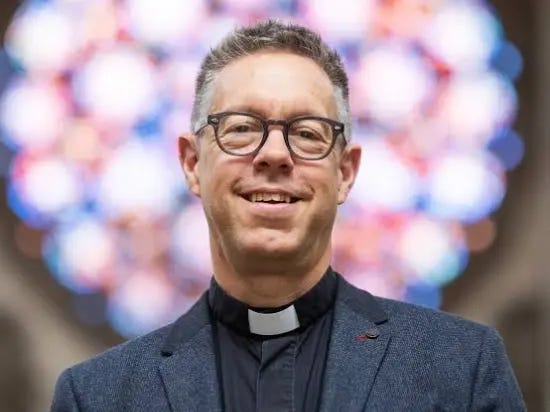
Now, the man named last month to become the next Bishop of Warwick, Tim Lomax, has also been the subject of complaints made to the National Safeguarding Team (NST). We found out this week that Lomax’s elevation to the episcopate, which was scheduled for a service on 6 November, has been postponed to give the NST time to explore the complaints made against him.
In a statement, the Diocese of Coventry (for whom Lomax would have been working as Bishop of Warwick), said the postponement of his consecration as bishop was because complaints were made after Lomax was unveiled as the diocese’s choice a month ago:
‘It should be stressed that at this early stage no findings have been made and no conclusions have been reached. Sufficient time will now be given for this assessment to be conducted. We are committed to taking seriously the experiences of all those involved, and want to assure you that all concerned are receiving appropriate support.
We recognise that this will be disappointing news for many people across the Diocese of Coventry and beyond, particularly those who have been looking forward to welcoming Canon Lomax into this ministry.’
It’s particularly unfortunate news for the Diocese of Coventry, as the previous Bishop of Warwick retired as long ago as May 2023, so they have been without their sole suffragan (junior) bishop already for three and a half years, and who knows for how much longer now. For the first year of that Coventry was also without its senior diocesan bishop too as there was a year-long vacancy from November 2023 to November 2024.
Lomax is not an especially well-known figure in the Church of England, and most recently spent ten years working for the Diocese of St Albans as their director of mission and ministry. If his name rings any vague bells for you, as it did for me when reading this story, it may be because he served as the Visitor for Soul Survivor church in Watford.
Soul Survivor became the focus on a huge story back in 2023 when its founder and leader Mike Pilavachi was revealed as an abuser. Lomax, as the Bishop of St Albans’ Visitor, acted as the point person for the diocese overseeing the church, which was an non-traditional congregation authorised under a Bishop’s Mission Order (BMO) and not part of the traditional parish network. So he was necessarily involved in trying to clear up that mess in Watford after Pilavachi left, as well as in theory overseeing Pilavachi for years before his exposure.
The independent review ordered by Soul Survivor into the scandal concluded that before the BMO started in 2014 (by which point the church had been running for over 20 years), the diocesan oversight was very limited and partial (and was fairly critical of this). Lomax himself said even after the BMO had regularised the situation, he found it hard to pin Pilavachi down and spent most of his meetings instead with Andy Croft, Pilavachi’s deputy who actually ran the church while his boss was away, as he often was. Lomax tried to improve this, and also sought to get Soul Survivor to appoint more independent external trustees to its board back in 2017.
Nevertheless, I had wondered if the complaints against Lomax were related to his work with Soul Survivor, but the Church Times has reported that this is not the case:
‘The Church Times understands that the complaints triggered a meeting of the National Safeguarding Team, which is currently making further inquiries. The complaints do not relate to children or young people and do not concern Soul Survivor, where Canon Lomax served as Visitor.’
So we don’t know what the allegations relate to, nor how long it will take the NST to come to any conclusions. And so both he and the Diocese of Coventry must wait in limbo to find out what will happen next. All the while, the wider C of E hopes and prays this does not end up with yet another senior leader charged with safeguarding offences.
A retirement overshadowed
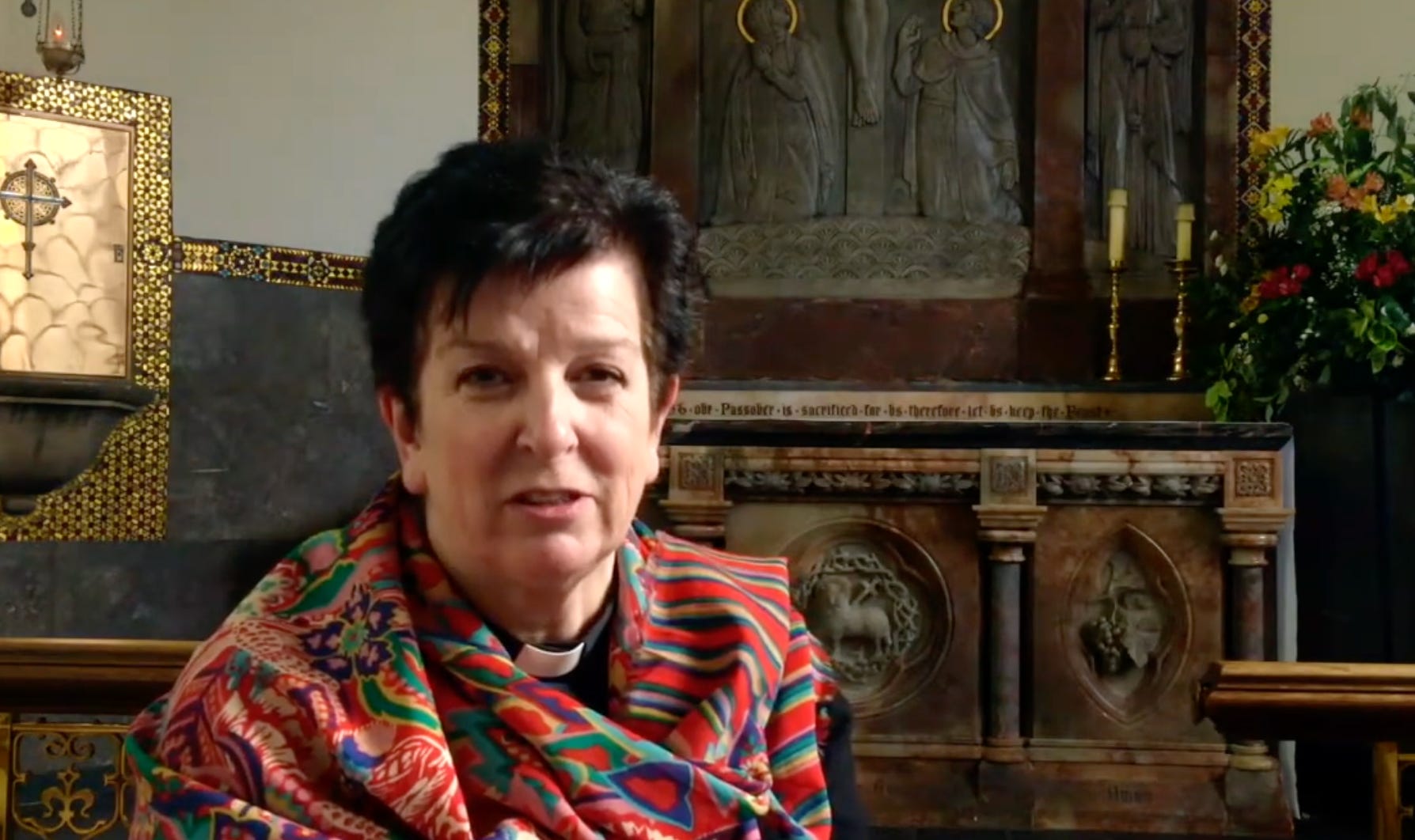
It’s not just the C of E struggling with complaints being made against their bishops. Long-time readers of The Critical Friend may recall the Bishop of Aberdeen and Orkney Anne Dyer, part of the Scottish Episcopal Church (SEC, that’s the Anglican sister church north of the border, not the much larger and quasi-established presbyterian Church of Scotland).
She has come up a number of times as she fought off numerous efforts by some in her diocese — and sometimes her fellow bishops — to get her to stand down. Her story goes back to 2020 when she had a falling out with the staff and dean of her own cathedral in Aberdeen. An official review in 2021 found she had been accused of bullying by eight separate people and concentrated power in herself, naming herself chair of all the diocese’s important committees, provost of its cathedral and assistant director of ordinands. Dyer — the first ever female bishop in the SEC — threw her power around, suspended fellow clerics for small personal slights, and was uniformly described as brusque, intimidating and harsh in personal interactions.
Dyer shamelessly faced down this highly critical report’s publication, brazened her way through an attempt at formal mediation via the other bishops in the church, and also stood her ground while suspended formally in 2022 over other bullying allegations. Then, despite the church’s independent investigator concluding there was a realistic chance of convicting the bishop, the church in 2024 decided to drop the charges and not take her to a tribunal hearing, partly due to concerns this would impose too much strain on her alleged victims.
The pugnacious bishop has also been the subject of separate investigations into allegations of financial misconduct, been repeatedly condemned by many of her own clergy, and even at one point had all but one of her fellow bishops asking her to resign. Time and time again she has refused to admit fault and insisted her opponents were ginning up false accusations against her simply because they disliked both her gender and her pro-gay marriage stance.
And so, after years of angst and frustration at Dyer’s intransigence it probably came as some relief when she announced just a few months ago she would be retiring from February. Except — of course — she’s now been the subject of yet another complaint. This complaint, entirely independent of the earlier allegations about bullying, relates to the designation of a temporary cathedral in the diocese, a statement from the SEC said on Tuesday:
‘Under the Canons, Bishop Anne is automatically suspended from office, without loss of emoluments, pending the outcome of the proceedings. Suspension is an automatic procedural requirement at this stage and does not imply any finding of fault.’
During her suspension, the Primus of the SEC (their name for their archbishop) will become the acting bishop of the diocese. This issue dates back to 2020 when Dyer stripped Aberdeen Cathedral of its official status as the mother church for the diocese and instead temporarily upgraded a parish church, St Mary’s, to pro-cathedral status. St Mary’s currently has no rector, but Dyer’s husband Roger is an assistant priest there holding the fort.
The dean of the actual cathedral, Isaac Poobalan, has previously accused Dyer of deliberately trying to drive him out of the church and dismissed the official explanation that Aberdeen Cathedral’s building was unsuitable for the task. He was suspended for a time by Dyer (although later reinstated), he says because he would not declare his “obedience” to her. The ordeal destroyed his mental health, Poobalan has also said.
In a statement, Dyer said she was ‘surprised’ that the complaint against her had been referred on to the church’s investigator. During her earlier two year suspension between 2022-24, the status of St Mary’s as the pro-cathedral (temporary cathedral) “was maintained by three acting bishops”, she added. She also said it was “disappointing that a small group continue to wage a campaign” against her, but that she was confident she would be exonerated as the accusations were “entirely without foundation”.
Given the cathedral malarkey dates all the way back to 2020, it’s hard not to conclude the complaint was only made now because Dyer had announced she was retiring soon. I think we can presume that the stripping of cathedral status was a lingering bone of contention for some in the diocese years after the fact, and they were probably jolted into trying to finally get Dyer held to account for what they perceived as her wrongdoings before it was too late.
It’s all symptomatic of the pretty dysfunctional relationships across the diocese for years now. There’s no rigid timetable or deadlines for the SEC’s investigations and suspension, so it’s entirely plausible that Dyer hits her retirement date in February while still under suspension and departs without any formal resolution to this extraordinary tussle. This would no doubt be infuriating for her antagonists, but, to be honest, entirely in keeping with the unsatisfactory nature of this saga from the beginning. Nothing is resolved, nobody is found guilty or found innocent, and instead the poison just lingers on and on.
The death penalty
Two stories about capital punishment in the United States have grabbed attention across the world: the doubly-botched attempt to execute Christa Pike, which left this convicted murderer alive but hospitalised, and plans by the federal government to livestream their own execution of the army officer behind the Fort Hood shooting. In today’s episode we reflect on the death penalty, which has been abolished for most of the Western world for generations yet persists in the US, and consider the arguments for and against from a Christian perspective. Does God sanction governments to carry out this ultimate punishment? What effect does taking another’s life have on us? Can the death penalty be reconciled with the gospel of grace and God’s offer of redemption in Christ?
Quickfire
A church in Dorset has installed a £20,000 children’s soft play inside its Grade I listed 15th century building. Somewhat surprisingly, everyone quoted in the BBC story about it is very positive, with locals pleased to have somewhere free to take their kids. Nobody seems to explain what the church hoped to achieve, beyond offering something nice to its parish.
A church pastor barred from returning to America has continued to lead his Wisconsin Pentecostal congregation from his homeland of Guatemala, appearing on video calls, doing WhatsApp pastoring and more from 2,000 miles away. Esdras Paredes was visiting family in Guatemala when he found out an old deportation order from 1991 was being enforced, blocking him from returning to his family and flock.
One thing we didn’t touch on in last week’s discussion of the C of E’s synod elections was the fact that candidates are no longer allowed to observe the votes being counted, primarily because it happens on computer software being run by someone working from home. One candidate has written in the Church Times about why he doesn’t think this is good enough.
A fascinating Economist long-read about why one island in Indonesia (the largest Muslim nation on Earth) is churning out an astonishing number of new Catholic priests. Many of these young Indonesians are nervous about being sent by their church to declining parishes in the West which can no longer generate enough indigenous clergy, in places like Ireland and Belgium.
Could this rock formation in Turkey represent the fossilised remains of Noah’s Ark, where it came to rest on a mountain after the flood receded? Probably not, but The Conversation digs into why more and more Christians are getting excited about it nonetheless.
The Catholic Archdiocese of Glasgow has announced sweeping plans to shutter dozens of churches across the city, after generations of decline left it with far too many buildings for actual worshippers. Closing 24 churches will cut the total parishes by about half, the archdiocese said, warning that in just the past five years its clergy numbers had also dropped by a third and therefore the current church estate was unsustainable. There are also wider plans to merge some of the eight current dioceses in the Scottish Catholic Church for similar reasons.
An update to a story from a recent Critical Friend: the Northern Ireland secretary has intervened into the standoff at Drumcree church to ban the contentious Orange Order parade (which was initially approved by the Parades Commission but has been blocked by a huge protest from Nationalists). This came after advice from the police that it wouldn’t be possible to force the street open for the Orangemen’s parade without massive disorder and the risk of violence.
The American Catholic bishops’ conference have condemned the government’s plans to livestream the execution by firing squad of Nidal Hasan, an army officer who murdered 13 people in an Islamist-inspired mass shooting on an army base in 2009. The church also said any Catholic soldiers should be excused from duty in the firing squad as it contravened their faith. A prominent Baptist megachurch pastor has however welcomed the livestreamed execution, and said the more people could see divinely-sanctioned punishment the better.
A rare tree snail has been discovered living in crevices in the wall of a Bedfordshire church. Peter Topley, a naturalist and lay preacher in the C of E, spotted the snail while accompanying his wife Caren — who is also the assistant rural dean in the area — while she visited the church. See, church news doesn’t have to be always be grim and depressing… 🐌
The Guardian visits the only remaining foundry in Lebanon making church bells for the country’s Christian community. The Naffah family has been making bells for 300 years, after initially converting their factory from producing rifles for local revolutionaries fighting Ottoman rule in the 1700s.
A complex legal fight over an infamous church-related crime has reached the Supreme Court. One-time churchwarden Benjamin Field was convicted of murdering a vulnerable older man in 2019, alongside a slew of other burglary and fraud offences. Now, his lawyers and the Crown Prosecution Service are arguing over a technical legal point about whether his victim knew his whiskey was being drugged by Field before he died, and if that affects Field’s legal culpability.
The Pope has endorsed one of his predecessor’s most contentious decisions, ten years on. Pope Francis produced a document in 2016 which addressed how the church might choose to welcome Catholics in irregular civil unions and second marriages, rather than bar them automatically from communion as had been church policy. Now Pope Leo has held a behind-closed-doors conference exploring this teaching and urged church leaders to continue to “courageously” accompany families even when they fell short from the ideal.
That’s all for this week. Thanks for reading, sharing and subscribing. If you’re not yet among the hallowed ranks of paying subscribers, you can join for just £5 a month right here, and get immediate access to the comment section, the full back catalogue of posts and occasional bonus content too.
The summary of the Theos report on Christian nationalism is excellent. The link to John Heathershaw's paper is helpful.
RED C UK who did the research questionnaire are perhaps better described as a market research firm that pollsters - they are not members of the British Polling Council. This is not to accuse them of anything improper but the BPC is perhaps more rigorous than the Market Research Society to which REDC does belong. Neither of course are flawless - JL Partners belongs to both.
Tim picks up on the "church turned into mosque" response. I think that the Questionnaire is flawed here because the answers are to a double scenario - part 1: the church being closed part 2: the (presumably deconsecrated) building being turned into a mosque. There is an attempt to control responses by a scenario of the church being turned into luxury flats and indeed the mosque scenario evokes a more hostile response than the flats scenario; but almost everyone lifts the mosque response and ignores the control which leads to a portrayal of far more hostility to Islam than a careful examination of the data warrants. It looks to me as if the main driver of unhappiness is the closure of the church.
I have a more fundamental problem with the exercise, which John Heathershaw picks up. Although there is data about the denominations of Christians (CoE, RC etc) there is no analysis of different responses from different denominations. It seems to me plausible that responses of CoE members and RCs will be different and that the church going separatists may well include a fair number of RCs. Also there are far more CoE than RC shown as responding to the questionnaire. Of course if one takes census and similar data where people are asked about their denomination then there are far more CoE. But if one counts bums on seats on a Sunday then the numbers are far closer. This is not a criticism of RED C or Theos -but a warning that to treat the analysis of such data with some care.
None of this detracts from the sterling work that Tim has done in producing so good a summary of the Theos Report, which is what we pay our subscriptions for. We have been given good value.