
Constructive ambiguity
The C of E dodges the key question on sexuality once more, while finding greater consensus around the Palestinian cause

Hello! Over the past weekend a few hundred Anglicans gathered as they always do in July at the University of York for the summer session of the Church of England’s governing assembly, the General Synod. They talked about a lot of stuff, but we’re going to pull out two debates in particular today.
The first concerned — what else — but same-sex relationships. Would the bishops manage to elude the trap set for them by the liberals, or would the synod finally express a view on whether gay sex was sinful or not?
The second attracted no less controversy. A diocese brought a motion urging the church to attend to a series of documents produced by Palestinian Christians, statements which Jewish groups said were inflammatory, inaccurate, divisive, and even antisemitic. Would the C of E take a side in this impossible conflict, and end up betraying either its Palestinian brothers and sisters or its Jewish friends?
Then there’s also my latest podcast (Can you ever have too much healthcare?) and an abridged list of links to interesting church news stories from around the web.
Constructive ambiguity

Back in May when the papers for the just finished session of the Church of England’s General Synod were published, my eyes were immediately drawn to a private members’ motion for Monday. We discussed why the 32 words of the motion in the name of Helen King, a leading liberal lay member, were so inflammatory, at the time. Here they are again:
‘That this Synod affirm that there are no fundamental objections to being in a committed, faithful, intimate same-sex relationship, and that such a relationship can be entirely compatible with Christian discipleship.’
This motion cuts to the core of the fudge the C of E hierarchy have tried to smother the sexuality debate in. Remember, the church has maintained its formal doctrine that sex is reserved for marriage, and marriage is only for one man and one woman. And so to hold that doctrine at the same time as push through blessings for gay couples in church has required a lot of work from the bishops into finessing the point. We’re not blessing the relationships, we’re only blessing the individuals. And it’s is just a pastoral response during a time of theological uncertainty anyway, it doesn’t mean anything more than that. We don’t take any stance on whether this particular same-sex couple are having sex or in a civil partnership or even a civil marriage — we’d even bless two friends of the same gender! Honest, guv.
But King’s motion would attempt to force the issue and make the synod, including the 50 most senior bishops who make up the House of Bishops, to actually come down on a side. Put aside all the shadow-boxing and casuistry over canon law and the precise definitions of words: is it a sin for two men or two women to be in a sexual relationship?
This indeed how Muriel Robinson (another liberal synod member who presented the motion on behalf of King who was unwell) introduced it when the motion came to the synod floor on Monday: Let’s face into our divisions and be honest about where we stand, rather than the endless proxy debates we have endured for the past three years under Living in Love and Faith (LLF).
But almost straight away, other members called foul. Isn’t this precise motion another example of the constructive ambiguity it purportedly seeks to end? Ed Shaw, a gay but celibate conservative lay minister, said that of course, everyone is created for intimacy. Jesus himself enjoyed intimate relationships with his disciples. But he didn’t have sex. What exactly does the motion mean by “faithful, intimate same-sex relationship”? We all assume, reading between the lines, this means a couple who are sleeping together, but does it really?
Another speaker even referenced the famous rabbit-duck optical illusion to make a similar point. The ambiguity, perhaps deliberately, could allow some people to convince themselves this motion doesn’t set itself up in contradiction of the church’s doctrine. But synod must not be duped, he warned.
One person, the chair of the House of Laity Jamie Harrison, then proposed an amendment which would rewrite the entire motion to something much longer but crystal clear. His new motion would reiterate the church’s teaching on sex and marriage, and then spell out that some on the synod believe same-sex relationships are fine, others are unsure, and still more think they’re wrong. And as such, we should just wait for the new Gender, Sexuality and Relationships working group (set up when LLF came to a close in February) to report back in due course. As well as being clearer, this kind of motion would give the new synod, due to be elected in the autumn, a freer hand rather than being hobbled by a vague and contentious parting gift from the previous synod.
Some members welcomed this, saying it did better justice to the dozens of hours of LLF debates at the synod and thousands of hours of work by theologians and other experts during the years of LLF. But others disagreed, including the only openly gay bishop in the C of E, Nicholas Chamberlain (a junior bishop in the Diocese of Lincoln). He spoke of a rising social hostility to LGBT people which mirrored a growing hostile environment in the church. The C of E had to move beyond what he called a “bureaucratic, filibustering amendment” which would only further polarisation.
But other bishops, including the evangelical Bishop of Sheffield Pete Wilcox, backed Harrison’s amendment, arguing it would prevent the original motion from upsetting the precarious settlement found when LLF ended in February. When put to the vote, Harrison’s fundamentally quite pro-status quo and establishment amendment predictably passed in the House of Bishops 17-7, but was defeated in the other two houses by relatively narrow margins.
A more successful amendment came from the Dean of Peterborough Cathedral Christopher Dalliston. His version rewrote the original motion to affirm that all baptised people, regardless of sexuality, are “full members of the Body of Christ”, that the church “delighted” in the lives and ministry of LGBT Christians, and acknowledged a “legitimate range of theological perspectives, held in good conscience” on same-sex relationships, and said this included some who affirm such relationships and others who oppose them.
It was a subtle tweak on the both-sides approach of Harrison’s, but crucially found more favour with the liberals, perhaps because of the bit about “delighting” in LGBT ministry and including them as full Christians. Obviously, only the ultra-conservative fringe would deny that gay Anglicans are real believers, so it had a better chance of peeling off some from the other side too. Although, it did describe the liberal position as within the “legitimate” spectrum of opinion, which is very much something many conservatives would deny as they endlessly remind us this is not an issue on which they can “agree to disagree”.
Several conservatives said even an amended motion retained too much ambiguity and would thrust the C of E backwards to the polarising and toxic divisions of the LLF years. But the amendment was passed in all three houses when put to the vote, and relatively comfortably which indicates that at least a few members who hold traditional views on marriage were willing to cross the aisle.
Still, many conservatives still spoke out against the amended motion, including the prominent celibate gay vicar Vaughan Roberts. His speech warned that to make progress in the next synod on this interminable issue would require much more than mealy-mouthed motions which simply stated some approve of gay relationships while others disapproved. The two sides do not agree and will never agree, and the church cannot affirm both positions nor can it meet in the middle. Eventually a decision will have to be made, and if the bishops were going to be consistent with what they said they were doing when wrapping up LLF they should vote against the motion.
Which, perhaps to Roberts’ surprise, they then duly did. Just as the chair was about to put the motion to a show of hands vote, a member who opposed the motion (as always happens) popped up to use the procedural trick of calling for a vote by houses not of the whole synod. And so it turned out that the clergy approved the amended motion 93-79 and the laity similarly passed it 101-83. But the bishops narrowly rejected it 14-11.
Because it was a vote by houses, this meant a defeat by the bishops trumped the much larger numbers for the motion among the clergy and laity. Yes, it’s stupid that the synod arithmetic can be so easily distorted by this blatant chicanery, but to be honest both sides use it liberally and are as guilty as each other of misusing this provision for partisan ends. And because both sides benefit at times from this egregious and anti-democratic abuse of the standing orders, neither is about to abolish or reform it any time soon. And so, the opposition of just 14 bishops in a chamber of 400 members was enough to bring the motion to a juddering halt.
So, where as we at the end of this? King’s gambit has failed, in that she has been unable to get the synod to make a public statement in favour of same-sex relationships (even though there is a small but consistent majority which holds that view). The fragile and precarious settlement imposed reluctantly on the church by the bishops in February has held: the church remains ostensibly opposed to sexually active gay relationships while also sort of looking the other way and offering them some pastoral accommodation.
It was probably always going to go this way. Even though Dalliston’s amendment passed and rewrote King’s original amendment to be more middle of the road and palatable to both sides, it still pushed the hierarchy into a corner they just aren’t ready to be in yet. The constructive ambiguity of the Prayers of Love and Faith — by which we maintain a traditional doctrine there isn’t the votes to change alongside significant pastoral innovation which strains against, if not breaches, the boundaries of that doctrine to appease the liberal majority — remains. That position essentially requires the church to duck what is perhaps the most obvious and necessary question of the whole farrago: is gay sex a sin?
The secular press could see this from the very beginning. I remember watching along the press conference back in January 2023 when the bishops first unveiled their plan to offer services of blessing for gay couples but not change doctrine. Several journalists probed into what the church now believed about same-sex love: is it sinful or does God approve? Three and a half years later, the leadership of the C of E is still not really ready to have that most obvious preliminary debate.
The alternative view is that defeating this motion was necessary to create space for the C of E to do the sexuality debate properly in the coming years. Imagine King’s unamended motion had passed. The synod would have declared its view that gay relationships were entirely compatible with Christianity. But that is all it is: the view of the synod. It wouldn’t have changed the doctrine of the church, which is set out in canon law and can only be changed by lengthy and ponderous synodical processes culminating in two-thirds majorities in favour of change.
It would have set up a profoundly uncomfortable tension between what the synod stated and what the church actually taught. It would have prejudged the years of work waiting for that sexuality working group the bishops are only now setting up. Everyone would assume and demand that this committee came to the conclusion the synod had already laid out for them, rendering their careful deliberations (hopefully this time actually including theological and legal advice from the beginning) pointless.
But it’s hard not to feel like all this is still shadow-boxing, the endless proxy debates about proxy debates about the real thing. Until and unless the church can answer with clarity and a degree of consensus the question ‘Is gay sex a sin?’ it won’t be able to finally put this interminable saga behind it.
Pick a side
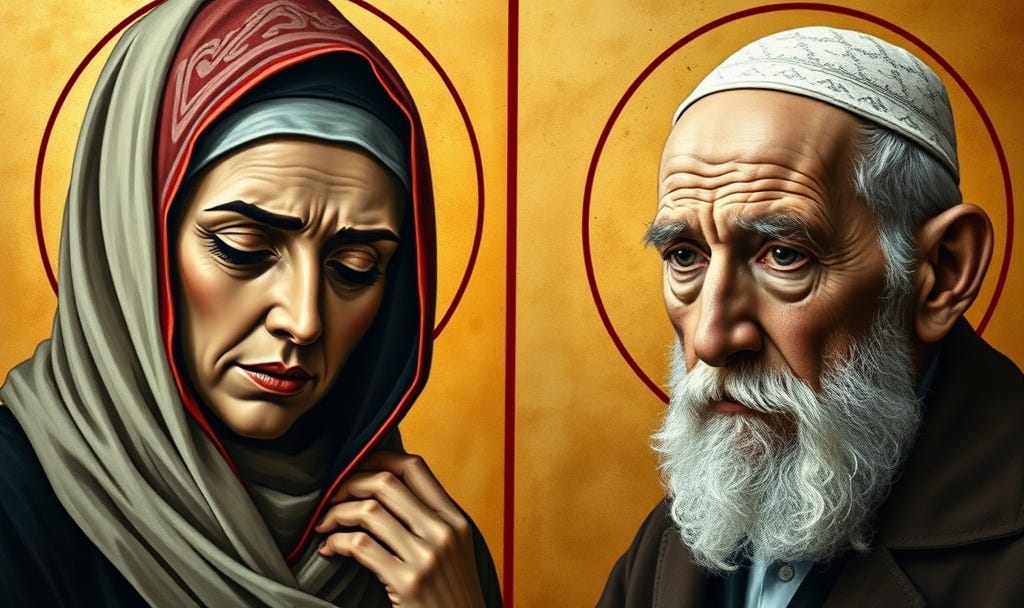
One of the other really significant debates at the synod was on a completely different topic, but one no less controversial: Israel and Palestine. They really know how to pick ‘em in the C of E…
This time the motion came from the Diocese of Carlisle’s local synod meeting. It had been passed by them as long ago as 2021 and had sat there gathering dust and signatures from synod members to be debated nationally for years. So long, in fact, there have been been dark mutterings by some that the powers that be were deliberately suppressing debate on this topic.
But finally, debate began on the Carlisle motion. A motion which had been significantly updated post 7 October 2023. In brief, the motion called on the C of E to stand in solidarity with Palestinian Christians and to seek a “just and lasting peace”. So far, so uncontroversial. It included all the necessary balancing language and clauses, speaking of rejecting antisemitism and anti-Muslim hatred, of lamenting the loss of both Israeli and Palestinian lives and yearning for “peace and security for all the peoples of these lands”.
But the critical part was clause (c) which called for the church to “receive” a series of documents and statements by ecumenical Palestinian Christian networks as “heartfelt expressions of the lived experience of Palestinian Christians and encourage the Church of England at all levels to engage with those documents”.
The most recent and most contentious document listed in the motion is one called Kairos II, issued in 2025. You can read it in full here, and it’s not easy to summarise a 14-page statement in a few words. In fact, kind of the whole point of the motion was to call on Anglicans to engage deeply with what our Palestinian brothers and sisters are saying and not lapse back onto surface-level generalisations.
Stewart Fyfe, the archdeacon who was sponsoring the debate, introduced it by saying the C of E could not ignore these documents, and in particular Kairos II, as they were the united voice of the grassroots of the Palestinian church. The document begins thus:
“We live now in a time of genocide, ethnic cleansing and forced displacement unfolding before the eyes of the world… Today, we renew our stand for truth and our commitment to fundamental religious, theological and moral principles... We renew our message of faith, hope, and love — offering a faith-inspired vision for the time after genocide.”
Using the G-word was also going to be inflammatory to many, as discussed in many previous Critical Friends. But the document doesn’t stop there. It goes on to describe the “genocidal war in Gaza” as part of Israel’s plan to permanently depopulate Palestine so it can seize it for itself:
“This genocide has been carried out by Israel after decades of apartheid, settler colonialism, political repression and the deliberate policy of killing any possibility of a political solution — including the two-state solution. Exposed today is the true face of Zionist ideology: a system that over decades has entrenched an organised and sophisticated regime of apartheid supported by advanced technologies that exercise total control over every aspect of Palestinian life — fragmenting the land, dividing its people, and turning Palestinian existence into an unbearable hell. Israel’s so called Nation-State Law enacted in 2018 embodies Zionist racism and arrogant Jewish supremacy in Palestine, making apartheid a lived reality.”
Kairos II also accuses Israel of pursuing war on Gaza to seize natural gas fields off its coast, condemns the increasing efforts to “Judaise” the city of Jerusalem (including attacks on Christians and churches) and laments the “suffocating siege” of the ever-expanding occupation of the West Bank. And they warn the Christian minority in the Holy Land is on the verge of extinction:
“We affirm, as Palestinians of all faiths, that we are the indigenous people of this land and that our very existence today faces an unprecedented threat. The continuous emigration of Christians does not stop, constituting a real danger to the Christian presence in Palestine which is now at risk of ethnic cleansing and extinction.”
Kairos II says much more besides this and is worth a proper read if you have the time. But it is unquestionably, at times, a difficult read. It’s raw with trauma and anger and bitter frustration, even resentment. The deep sense of betrayal runs through it, betrayal by international bodies, betrayal by other Middle Eastern nations, and betrayal by the global church.
Imploring synod to vote for his motion, Fyfe acknowledged that the language of Kairos II could at times be fierce or uncomfortable. But it arose from deep and lasting trauma, he said, and we would not seek to police any other trauma survivor’s language. Give the Palestinian church hope by honouring their call and listening to what they want us to hear.
This point was picked up in the first speech, which came from the Archbishop of Canterbury. Freshly returned from her own visit to the Holy Land, Sarah Mullally said the documents the synod was being asked to engage with reflected the pain of the Palestinian people. “We must listen to things which are hard to hear,” she told the synod. To hear their experiences did not require us to agree with everything they said, she added.
But others quickly spoke up to echo concerns raised before the synod by Britain’s Jewish leaders, including the Chief Rabbi and the Board of Deputies. It was all very well to pay heed to the cry of the Palestinian church, but the C of E must not appear to endorse or legitimise a document which strayed towards, or maybe flatly expressed, antisemitism. Several speakers suggested that Kairos II calling Zionism an intrinsically racist enterprise contravened the internationally recognised definition of antisemitism the church had adopted which explicitly includes as antisemitic “claiming that the existence of a State of Israel is a racist endeavour” (more detail on that here).
Others questioned why the church was only being asked to listen to one side in this complex and knotty conflict. Why not hear from Jewish and Israeli perspectives too, rather than allowing the C of E’s engagement with the debate be framed solely by Palestinian Christian statements? Some members sought to amend the motion dramatically by stripping out any reference to Kairos II and indeed any Palestinian documents or by rewriting it more neutrally to reflect the suffering and grievances of Israelis alongside the Palestinians.
But Fyfe and others vigorously opposed this. He insisted nobody was being asked to agree with everything in Kairos II, but it was not up to us in the comfortable Western church to dictate to Palestinian believers how they should more appropriately characterise their situation, to dictate what they should or should not say. Our call was to listen and to express solidarity.
Some speakers passionately denied claims of antisemitism in Kairos II, insisting both it and the motion explicitly reject hatred of Jews. In fact, they pointed to parts of Kairos II which call out the use of false accusations of antisemitism to silence criticism of Israel and also silence the cries of the Palestinians. If the synod refused to pass the motion unamended, it would effectively be saying that solidarity with Palestinian sisters and brothers was too costly, one said bitterly.
Some amendments were successful, including one which replaced the words “receive the Kairos II document…” to “hear the Kairos II document…”, and another which added clauses to lament the church’s own historic role in both antisemitism and the sorry history of the Holy Land.
But over time the dividing lines became clear. Few in the synod denied the tragic reality and plight of the Palestinians. Few denied the enduring reality of antisemitism and how Jews around the world remained targets of violence and hatred. What separated the two sides in this debate was how to reconcile this. Some said if the church would not at least listen to the Palestinian Christian witness, no matter how uncomfortable or pungent, they would be abdicating their responsibilities. Others said if we did receive this witness, we would be denying our Jewish friends their own identities and stories and imperilling their safety. Everyone said on the surface you don’t have to choose between resisting antisemitism and supporting the Palestinians, but it very much seemed like the church was being asked to do exactly that. Either it passed the motion and disgusted Britain’s Jewish community, or it voted down the motion and betrayed its Palestinian siblings.
Almost this exact point was made by the Bishop of Burnley Philip North. He spoke of the complex interplay of Muslim and Jewish relations in his patch of the North West. It might make sense in the rarified air of the synod to play down or deny any dichotomy between supporting Palestine and deploring antisemitism. But in Lancashire, the large Muslim population and the tiny “beleaguered” Jewish community would ignore this dancing on a pinhead. If the motion was either passed or rejected, one side would exult as the winners and the other side feel betrayed. As a church committed to “national unity” this would be intolerable, North argued. Better to say that the debate itself was sufficient to hear the Palestinian voice, and then move on to the next item on the agenda without a vote. Yes, many speakers have warned the church against staying silent on this issue, “but in some contexts the only right response is the language of prayer”, he concluded.
Finally, after the debate went on so long it had to be resumed the following day, the lightly amended motion was put to the vote. Despite the many speeches cautioning against Kairos II, it won strong majorities in all three houses. The cumulative vote across the synod was 253-47 (albeit with a sizeable number of abstentions at 70).
This has prompted a wave of condemnation of the church. The Chief Rabbi Ephraim Mirvis said it was a “sad day for Jewish-Christian relations” and a shameful moment for the C of E:
“[Kairos II] is a document full of falsehood, which openly rejects dialogue, uses extreme rhetoric to challenge the very existence of Israel and objects to existing peace agreements in the region. Though it poses as a route to understanding, Kairos II in fact functions as an egregious barrier to it, reducing one of the world’s most complex conflicts to a single, warped narrative, which can only harm the cause of peace.”
Well-known vicar Giles Fraser wrote in the Jewish Chronicle the debate was a “disgrace” and the motion a “blatant” example of antisemitism according to the definition accepted by the House of Bishops itself:
“The only possible Christian response to the horrors of the Holocaust is to stand in solidarity with the most successful project of Jewish safety since the parting of the Red Sea.”
For some the hyperbole went even further, with a comment piece in the Jewish News somewhat ludicrously suggesting that the C of E was lapsing back into the antisemitism of its medieval era in a bid for cultural clout:
“A declining institution desperate for relevance, it appears to believe its salvation lies in the modern, socially acceptable version of the oldest hatred, for which it apologised just four years ago. No matter, the Church of England is finding its way back to Jew hatred.”
A more measured response was issued by the Council of Christians and Jews, one of the longest-serving interfaith outfits in the country. It was important to listen to Palestinian voices, the charity said, but Kairos II did not speak for all believers in the Holy Land and the document raises “deep concern” among Britain’s Jews:
“We remind Christian clergy that standing alongside Palestinian Christians must not be at the expense of UK community cohesion, nor the safety of local faith communities here in the UK. Our thanks again to all those who spoke out of concern for the Jewish community and in favour of nuance.”
A small group of church leaders from other denominations have even launched a rival Christian Zionist declaration against Kairos II, with the pastor who started the project insisting it was about correcting the C of E’s faulty theology which denied “the central place of the Jewish people and Israel in God's redemptive plan and purpose for history”.
For me, the result of the debate feels like the right outcome. Kairos II is indeed a tricky piece of work, and not something I think it would be wise for the church to uncritically endorse. At times it veers towards simplistic or even conspiratorial explanations of Israeli action, and somewhat dodges the partial complicity of some Palestinian groups for the cycles of violence and retribution. But it is also the authentic heart cry of pain from a tiny church suffering under violent occupation, and surely the comfortable C of E has to listen to this and seek to understand it, which need not end with agreement.
The occupation of Palestine and oppression of its people by Israel is unambiguously wrong, both in terms of international law but more importantly in terms of morality and Christian ethics. Antisemitism is a vicious hatred that threatens the God-given dignity of Jews everywhere and something all Christians must oppose. I don’t see any alternative but for the church to hold onto both these positions simultaneously.
Yes, to seriously attend to the suffering of the Palestinians will, regrettably, be interpreted by some Jews (incorrectly, I think) as aligning ourselves with antisemites or imperilling their own security. This is deeply unfortunate but cannot be used as a cudgel to prevent the church from its necessary prophetic task of calling out injustice against its Palestinian sisters and brothers. We shouldn’t have to choose between the two sides, but if we are forced to then the synod made the right call to hear the voice of its suffering brethren in the Holy Land rather than prioritise smoothing over interfaith relations closer to home.
Enough is enough: Can you have too much healthcare?
In the modern West we normally do not question the idea that it’s always a good thing to have more medical research, more treatments, more new drugs and more money spent on healthcare. But could we be making an idol of our own bodies and health, as well as creating unintentionally perverse consequences for lower income countries trying to keep up with the West’s rapacious and insatiable desire for longer, healthier lives?
Quickfire
Events out of my control mean no time this week for a proper list, so here are some very brief headlines:
Pope promotes Italian nun to top migrant role in his first major appointment of a woman to Holy See
Meet one of the UK’s first churches to accept Bitcoin donations
‘Ann Widdecombe’s safe haven’: poignant Mass at her beloved abbey
Chinese Christians are disappearing for worshipping a God other than Xi
Church of Norway swaps logo with Church of England after World Cup bet
Mystery donor of gold coins to churches was a leather-clad biker
The Bible verses dividing Washington: How Matthew 25 became a political litmus test
Thanks for reading. I’m taking two weeks off on holiday, so normal service will resume later in August.
Tim, thanks for your careful account of the Synod debate on Helen King's motion. (I am not sure why you call it 'constructive' ambiguity though—it is exceedingly unhelpful, as you point out.)
On KPII, the document is clearer than you allow. It says plainly that the *whole* endeavour of Israel is illegitimate, because it has 'racist foundations'. This is a reference to the Law of Return, which actually defines Israel as a homeland for Jews, which had been the intention for the previous 100 years. This is unacceptable to Palestinians. So this document is a call for the dismantling of the State of Israel, and is not arguing for peace or a two-state solution.
As I noted in my article on it, I raised a point of order with the Synod staff, and they confirmed—yes, it is clearly in breach of IHRA, and so clearly antisemitic. Philip North was right: 'hearing' this rather than 'receiving' it is dancing on a pinhead. Putting the two debates together: imagine we had tabled a paper which was clearly homophobic and argued that gay people should not be able to live in safety. I don't think it would cut much ice to say 'We are only agreeing to read this, not approve all that it says'.
The archbishops and the staff of synod had been warned about this beforehand, but paid no attention. I think Jewish response (from around the world in fact) is quite justified.