
Churches to mosques
Should we be lining up to thank Reform for saving our places of worship from Islamisation? And did the C of E's bishops meet the mark over a contentious abortion reform?

Hello! I’m sorry this newsletter is arriving later than usual today - events outside of my control (including my wifi going down yesterday) have conspired against us.
Our first story is about the growing Christianisation of right-wing politics in Britain, as the populist nationalist party Reform lean into a somewhat harebrained policy to forbid by law any church from being later converted into a mosque. Is this actually a problem needing solving? And how should mainstream church figures respond to Farage et al parking their tanks on our lawn?
Then we catch up on more ripples from that infamous boozy party last autumn in the Bishop of Lincoln’s house, before exploring how Sarah Mullally’s preparation for her enthronement as Archbishop of Canterbury got overshadowed by an abortion debate in the House of Lords.
There’s also our latest podcast (Why are young people getting back into the weird and the magical?), and the usual list of interesting church news stories from around the web (including south London’s answer to Jean Valjean, meek Episcopalians try to gin up some fight, and the secularists come for our Bible colleges).
Churches to mosques
Has British politics all of a sudden got religion? That’s the question being asked by the sober-minded Financial Times, not a newspaper prone to giddy flights of fancy or over-egging the pudding. Robert Shrimsley, a long-time FT political commentator, began his column by noting James Orr, a Cambridge theologian already mentioned once or twice in The Critical Friend, has been appointed as Reform’s head of policy. And alongside Orr in leading Reform’s thinking is another fervent Christian, the evangelical former Tory MP Danny Kruger (also not unknown in these pages).
But the Christianity being fused with right-wing politics is not the genteel Anglicanism of the 20th-century Conservative Party, Shrimsley argues:
‘The faith this movement projects is forceful social conservatism. Grievance is central to this agenda. Christian values are depicted not as quietly embedded but under siege from immigration, multiculturalism and Islam.’
It goes bigger than just hostility to immigration and Muslims, Shrimsley goes on to say. The Christian Nationalists running Reform (or at least advising Nigel Farage who is the only person whose opinion really matters in the one-man-band that is Reform) are also going to focus on raising birth rates, abolishing the Equality Act, regulating porn, perhaps even restricting abortion.
For decades the complacent liberal centre of British politics assumed an American-style Religious Right could never thrive in the decidedly secular UK. But this might have been a mistake, Shrimsley concludes:
‘Reform does not seek to win round those who are most offended by it. In the UK’s current fragmented electoral politics, a third of voters could be enough to win. By framing this as a culture war and antidote to social decay in a “broken” Britain, the religious right is not looking for easy compromises.
Either way, it is clear that Britain’s political evangelicals have found a credible vehicle from which to push Christian ideas in the mainstream. The radical right has been consistently underestimated in Britain and the west. It would be careless to assume this road must lead nowhere.’
I think this goes a little far — Britain’s evangelicals are quite politically varied and certainly not monolithically right-wing in the way their American cousins are, even if generally socially conservative. In fact, when you look at the kinds of people involved with Tommy Robinson et al they’re not mainstream evangelicals, or mainstream Christians at all on the whole. There’s a lot of odd tiny breakaway sects, independent Pentecostal types, self-appointed bishops etc.
Anyway, Shrimsley has certainly got well-attuned political antenna because his column landed at a time when the media was suddenly full of stories about Reform’s push to normalise Christian Nationalism. It was kicked off by Zia Yusuf, the party’s home affairs spokesperson. Yusuf is a businessman and financier whose large donations to Reform bought him a place at its top table, as well as being, interestingly for what we’re about to talk about, a practising Muslim.
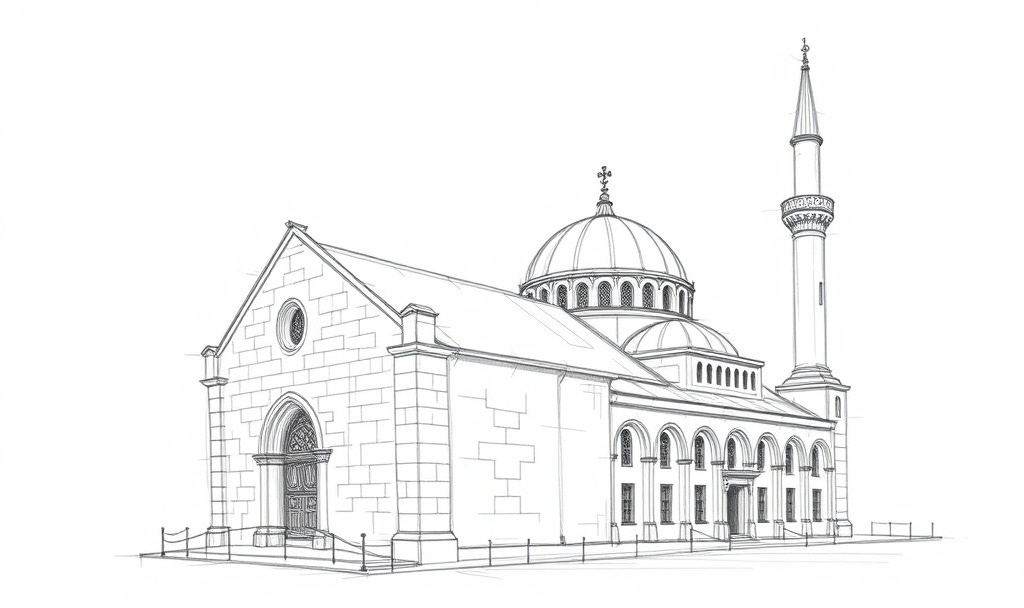
Yusuf gave a big interview to The Times to mark his promotion to the home affairs gig, in which he made a number of overtly Christian Nationalist pledges. First, a Reform government would change the law to stop churches from being turned into mosques. Britons were anxious about seeing crosses replaced with minarets, Yusuf claimed, and said Reform had identified 40 examples of this happening in recent years:
“Regardless of whether somebody is of faith or not, or which faith they follow, I think the Christian heritage of this country is very important and protecting our heritage and our culture is important, otherwise the country is not a country, it’s just an economic zone.
“And so, as one step in pursuit of that, we will end the incendiary practice of converting churches into mosques or any other places of worship by granting listed status automatically to all churches and prohibiting that.”
Did you spot how they will do this? By automatically granting listed status to every church in Britain and then creating a new legal category for them which would prohibit them from being given planning permission for a change of use. Now, putting aside for a moment the substance of the policy, this way to achieve it is absolute madness.
As the many vicars who read this newsletter while managing listed churches well know, it can be a real heavy burden to shoulder. Listed buildings require complex and expensive consultation and approval before making even tiny alterations or repairs to their fabric. The Church of England is partly dying in rural areas because it is too expensive to maintain its collection of ancient church buildings yet it cannot mothball them, repurpose them or easily sell them off because they are listed.
Making every single church a listed building might well have the unexpected consequence of bankrupting some congregations, as well as pointlessly freezing in aspic whole classes of buildings. Churches in Britain are not solely the gorgeous picture-postcard traditional structures you see in your mind’s eye, built of mossy stone with a bell tower, historic graveyard and lychgate.
There are also tens of thousands of churches which are generic boxes, tucked into industrial estates. Or repurposed homes and halls on ordinary high streets. Are we saying all of those, including the ones with no architectural value or religious appeal, are now to be listed and must serve exclusively as Christian places of worship forever more? Even if they were only bought yesterday by a here-today-and-gone-tomorrow independent congregation? It doesn’t really feel like Yusuf (or even Orr if he is behind this policy) has thought this one through.
There’s also the more significant question of is there actually an epidemic of churches being converted into mosques, or is this just a racist dogwhistle? Helpfully, The Times has looked into this and concluded, no, it’s not really a thing. Yes there are a handful of mosques today whose buildings were once churches. But it’s really only a handful: of the 47,000 churches in Britain in 1960 just 0.09% have since been so converted. That’s about 42 in total. Indeed, the C of E, keeper of the country’s largest number of churches, has an explicit policy to impose covenants on redundant church buildings it sells off so that they cannot be used by other faiths as a place of worship (most recently this prevented a plan to turn a Sheffield church into a mosque in 2024).
And, it’s worth stressing, none of these saw an aggressive sharp-elbowed Muslim group force their way in and dispossess an helpess indigenous Christian congregation. The vast majority of churches which have been converted to mosques were redundant and empty, sometimes for years, abandoned by their former congregations (if the congregation itself had not ceased to exist). One example, the New Peckham Mosque in South London (which was originally St Mark’s), was closed for worship in 1965 before becoming in first a scrap metal dealership and then a pickled onion factory, before it was bought on the open market by local Muslims. It’s not clear to me why this is either “incendiary”, as Yusuf claims, or indicative of a failure by Britain’s political class to protect our national Christian heritage.
Indeed, it’s hard not to agree with Linda Woodhead, a sociologist of religion quoted in this second Times piece, who suggested that the actual reasons churches were lying empty or being sold off were not being tackled by Reform, who instead preferred to whip up hostility between different parts of British society. It’s pretty obvious if you actually spend any time in in churches that they are shutting down because a large majority of the nominally Christian white Britons living here don’t turn up on Sundays. There is no malign conspiracy by our governing classes to undermine our Christian heritage (let alone supplant it with Islam) — if it is being undermined it is by the decades of neglect, apathy and unbelief of the indigenous British population (indeed without devout Christian migrants from other parts of the world landing on our shores, churches would be in even more peril).
On top of that is the crippling burden of maintaining these buildings with donations alone, often from small congregations full of elderly people with limited funds. Most European countries levy taxes (sometimes voluntary ones) to raise funds which maintain their national church infrastructure. But in this country no denomination, including the established C of E, gets any meaningful help from the government (one small fund to help take VAT off repairs was recently cut back significantly).
Paradoxically, Reform’s wheeze targets a non-existent problem (viable active churches being turned into mosques) but in so doing hugely exacerbates a real problem which actually is crippling our Christian heritage (making every church listed and therefore hugely increasing the cost of maintenance). So yeah, not only is it a racist dogwhistle designed to further poison ethnic and religious relations, it will also make the situation worse. It’s only made more tragic that this scheme is being fronted by, of all people, a Muslim who must know of the difficulty his co-religionists already often have in finding places to build mosques.
Of course, all this comes on the back of the sudden emergence of populist Christian Nationalism in Britain last year, most notably at Tommy Robinson’s Unite the Kingdom rally back in September. But it’s rumbling along in more mainstream politics too. As well as Reform’s growing dalliance with Christian Nationalism, there have been Conservative Party figures also dipping their toes in the same water. Just this week the shadow justice secretary Nick Timothy condemned an ‘open iftar’ celebration in Trafalgar Square (which included traditional Islamic prayers as well as the Ramadan fast-ending meal, and was attended by the mayor of London Sadiq Khan) as an “act of domination” which should not have been permitted (curiously Timothy has no problem with the countless acts of Christian worship which taken taken place in that same square over the years).
Since this all emerged last year there’s been a fascinating internal discussion within mainstream denominations about how to respond to this. Some want to denounce those waving crosses and shouting ‘Christ is King’ for ‘co-opting’ Christianity, seeing it as little more than a blasphemous attempt to baptise far-right bigotry in the language of faith. But others have urged a more open approach, suggesting that there is an opportunity here to try and re-engage with disaffected white working class communities who are clearly interested in exploring Christian ideas, even if we may not approve of their views on Islam and immigration.
One bishop attempting something closer to the latter is Martyn Snow, the Anglican Bishop of Leicester (and therefore no stranger at all to multicultural Britain in all its diversity). He attempted to respond to Farage’s latest provocation, when the Reform leader dismissed the C of E bishops for having their heads in the sand over migration. Indeed, he also argued a variant of the classic populist rallying cry: the bishops are elitists who are out of touch with the deeply-held views of the ordinary Briton, saying the leadership had a “rather twisted view of what their flock in this country actually want them to do”.
But Snow said the church must take its lead not from polls or politicians, but from Jesus, who called them both to “welcome the stranger” and also to “love our neighbour as ourselves — including those with radically different views from our own”:
“We recognise that immigration and border policy are matters of deep concern for many across our nation. And we recognise that people are anxious about the pressures on services, community solidarity and the integrity of our borders — issues which deserve honest and constructive public debate. So, we affirm the right of people to express concerns about immigration, but we must equally challenge rhetoric that dehumanises vulnerable people fleeing violence or persecution.”
Snow said he had invited Farage to come and see what Anglican churches were doing to support both those who are seeking refuge in Britain and also “those who feel themselves overlooked by Westminster politicians”, but he had not had any reply. Snow is also the chair of a new group of bishops tasked with exploring how to “promote unity in our nation”.
‘Churches can be spaces where different responses to immigration can be listened to with respect and empathy. In that spirit, we call for a mature debate on the different impacts of immigration (recognising that we cannot have unregulated borders). Alongside this we believe that our country must remain welcoming to those who are genuinely fleeing war or persecution.’
There is a risk this descends in classic Anglican fudge, trying to be all things to all people. We want to be the church for those fearful of racist attacks because they aren’t white or weren’t born here. We also want to be the church speaking up for forgotten communities angry about pressure on public services. We hear you, and you, and you, and you too! We agree with everyone!
But, to their credit, the bishops try to land their statement with something more practical and actually take a position too. They come out unequivocally against those who try to use Christian symbols to intimidate or “sow division”. But they also come out strongly in favour of the use of the flag of St George, which has been flown from lampposts across the country as part of an amorphous grassroots campaign (and sometimes condemned as fear-mongering or unwelcoming):
‘We rejoice that the flag of St George is the national flag of England and contains a cross as a sign of our Christian heritage. This heritage should be celebrated. However, the flag cannot be owned by any one group or cause. Rather it is a symbol of unity, inclusion and our common life around which we all gather. The vast majority accept this as our heritage and want to unite behind the flag as a symbol of national unity and inclusion, based on our Christian heritage and broader values of respect, compassion and care for all.’
So if we are to rally behind the flag, let’s actually get to grips with what the cross at its centre really means, the bishops conclude:
‘There is little point claiming it as our heritage if we don’t understand its meaning. Thousands of local churches across the country stand ready to explore this meaning with people of all backgrounds in the communities we continue to serve.’
I have a lot of time for this, which I think is exactly the right way to try and tap into the obvious deep political alienation some feel around migration and social cohesion. It seems to me vital that the churches, and especially our ostensibly national church the C of E, do not become indelibly associated with a cosmopolitan sneering disdain for symbols of national pride like the flag. Yes, it is complicated and yes there are plenty who are using that same flag as a way to intimidate or mark out territory. But given the actual Christian heritage of that flag and this country, it would be foolish not to use this unexpected debate about religion, politics, and national identity as a way to talk about what it actually means to follow Jesus as an English person.
Another bishop on this bandwagon is Philip North, the Bishop of Blackburn, who has bravely gone into the lion’s den and given an interview to the Daily Express. He said the Brexit vote should be understood not as an expression of racist intolerance but a cry of national pride:
“I saw pride in nation in that vote and people standing up for a vision of nation and a particular vision of sovereignty that I felt needed listening to and honouring.”
He was candid that there is some alienation between the church’s leadership and its people, too. If we’re honest, the hierarchy is mostly pro-Remain while the membership mostly pro-Brexit. Or in the language of the writer David Goodhart, a leadership dominated by ‘anywhere’ people (socially liberal, mobile, higher-educated internationalist types) but a membership dominated by ‘somewhere’ people (community-focused, socially conservative, rooted in a specific locale). But the church should act as a bridge, given it has clergy deployed into every place in Britain, including the highly diverse inner cities where the flag is a “thing of fear” and the deprived outer housing estates where that same flag is “thing of pride”.
But for all those Christian figures keen to reach out to Reform-curious Christian-adjacent nationalists, there are also some who want to slam the door. There was a mini example of this when Reform held a press conference to announce Yusuf (and others) as their new national spokespeople. Because said press conference was held at Church House, the C of E’s national HQ in Westminster.
A coterie of small grassroots pressure groups with names like Christians for a Welcoming Britain and Christians Against the Far Right, condemned the church for taking the booking. The letter, co-ordinated by a vicar in Somerset, said they were horrified the church appeared to be giving its “blessing” to Reform:
“Church House has provided a veneer of spiritual legitimacy to Reform’s anti-migrant and anti-Muslim politics, and their cynical scapegoating. As followers of Jesus, we must refuse to let the architecture of our faith be used to endorse the dehumanisation of our neighbours. The Church must be a sanctuary for the displaced, not a platform for their expulsion.”
The complicating factor here is that Church House as an events venue is managed by an independent company, not controlled by the C of E. The company does have a policy refusing to take bookings from groups which “promote racial prejudice”, although of course Reform would vociferously deny it does any such thing. Because of its central location just a stone’s throw from parliament, Church House is actually a very common venue for political parties and more besides. It has has previously been criticised for hosting an arms expo and boxing matches, although it is in theory free to take any bookings which do not explicitly contradict the church’s established teaching.
Reform dismissed the complaints as “little more than a cheap political stunt by a group that is completely out of touch with the British public”, and warned trying to shut down debate on an important issue was both “un-Christian and authoritarian”.
For what it’s worth, trying to erect a cordon sanitaire between the political party which has topped the polls for years now and all mainstream Christianity seems to me doomed to failure. I’m all in favour of robustly, maybe even prophetically, calling out the actual far-right. But when a right-wing populist nationalist party has captured this level of backing from the electorate (Reform has had a roughly 10-point lead over the next largest party since the summer), the days when we could squash it with some sort of ‘no-platform policy’ are well behind us. If the church wants to see off the challenge of Reform and return British politics to its previously irreligious state, it’s going to have to defeat their ideas in the public square.
Space for healing
A brief update to our story from Lincoln a few weeks ago. You may recall that the parish church council whose vicar, Sion Hughes Carew, had been convicted of drink driving and disciplined by the C of E, had passed a resolution calling for him to be removed as their priest. Their motion ended thus:
‘We note with sadness that, three and a half months on from the incident, the Revd Sion Hughes Carew has yet to offer his parishioners an apology.’
Well they have now their wish, as Hughes Carew has both resigned and apologised. In a letter sent to the church, the priest said he was “deeply sorry” for his actions on that fateful night of 17 October:
“I bitterly regret placing members of the public and people in our parishes at risk by my dangerous and irresponsible behaviour, and for that I apologise unreservedly to you all. Many of you will know that, in the months leading up to that evening, I had been under a great deal of stress and struggling with depression. While this does not in any way excuse my actions, it does form part of the context within which they occurred.”
He went on to say that he knew some in the church had lost confidence in his ministry and so “with sadness” he had decided to resign.
“I am confident that my decision will allow the parishes to move forward into a new chapter of ministry.”
He’d agreed this with the two bishops currently running the Diocese of Lincoln during the absence of his erstwhile close friend, the Bishop of Lincoln Stephen Conway, who remains suspended after he was arrested on suspicion of sexual assault.
Hughes Carew’s letter makes no reference to Conway, but ends with the vicar reporting he was making “progress” in his “recovery” thanks to the prayers, therapeutic and pastoral support he was receiving:
“I hope that the coming months will provide space for healing, both for the parishes and for me personally. Thank you to those who have continued to offer compassion, prayer and support during this time. Please be assured of my ongoing prayers for the parishes of All Saints and St Mary’s, and for all of you who worship and serve within them. I pray that, in time, God’s grace will bring healing and renewal for all who have been affected by the events of the past year.”
Do justice and love mercy
Sarah Mullally had hoped to spend a quiet week building up to her enthronement as Archbishop of Canterbury next Wednesday in contemplative pilgrimage, winding her way on foot from St Paul’s Cathedral in London down to Canterbury Cathedral. No such luck. Out of nowhere a rare outbreak of meningitis has erupted in Canterbury, so far killing two students (although the C of E has insisted this will not interfere with their plans for Wednesday’s service and they have been advised it can all go ahead safely).
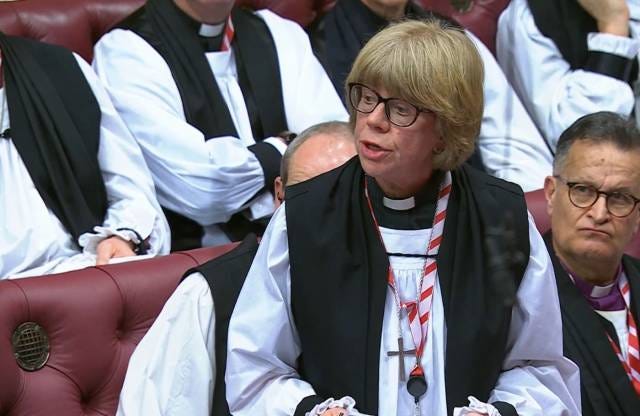
But then it emerged that her six-day 140km pilgrimage would overlap with a crucial debate in the House of Lords on the decriminalisation of abortion. This was mostly bad luck — the pilgrimage has presumably been months in the making, whereas peers only found out when the decrim vote was happening last Friday. There was a brief online kerfuffle as some Christians got very exercised about the idea that Mullally might miss the vote due to her supposedly frivolous and performative pilgrimage, until her office confirmed that yes she would be in the chamber for the debate (before then resuming her walk). There was also growing pressure from pro-life Christian groups (which mostly do not hail from Anglican backgrounds) demanding the bishops use their somewhat under-utilised presence in the legislature to stand up for unborn life.
If you’ve forgotten what the issue at hand is, you can catch up with this old newsletter. In a nutshell, MPs last summer tacked on a clause to an unrelated bill to prohibit any criminal prosecution of a woman for aborting her pregnancy after the legal 24-week limit. In tandem with telemedicine abortions (sometimes known as pills by post) which since covid have meant women can be sent abortion pills after a remote consultation without ever seeing a doctor, it de facto makes at-home abortion up to term permissible. If a woman is prepared (or coerced) to lie on the phone about how far along their pregnancy is, they can abort an unborn child all the way up to full term without any risk of being arrested or prosecuted.
When the decrim vote passed in the House of Commons, Mullally (then still the Bishop of London but also the C of E’s chief spokesbishop on health matters) issued a carefully worded statement expressing some concerns:
“Women facing unwanted pregnancies are confronted with the hardest of choices. Ultimately, they require compassion and care in order to support them fully in the heart-wrenching decision they must take. They should not be prosecuted.
However, decriminalising abortion can at the same time inadvertently undermine the value of unborn life. The amendment passed to the Crime and Policing Bill may not change the 24-week abortion limit, but it undoubtedly risks eroding the safeguards and enforcement of those legal limits.”
She then mentioned the risks to vulnerable or coerced women, and flaws with the pills by post assessments, before linking approvingly to an open letter signed by 13 bishops and hundreds of clergy criticising decriminalisation. She also said it was wrong that such a “fundamental reform” to abortion laws could be squeezed through without any meaningful public or parliamentary debate in an amendment to another bill:
“We need a path that supports women, not one that puts them and their unborn children in the way of greater harm.”
In the end, the Lords rejected an amendment which would have stripped out the decrim clause from the Crime and Policing Bill on Wednesday, and also rejected another proposed amendment which would reinstate in-person consultations for all abortions (effectively rolling the clock back to 2020 before covid prompted telemedicine consultations and pills by post).
But Mullally and other Anglican bishops also present argued against decriminalisation. The archbishop reiterated the longstanding C of E official position on abortion (which opposes it on principle while reluctantly accepting in some circumstances it might be the least bad option), and said she could not support moves to decriminalise abortions.
Not least for the health risks (taking abortion pills after 10 weeks’ gestation can put the mother at risk), Mullally said. But she was also alarmed at how what was supposed to be a technical change to abortion laws was actually sneaking in a much more significant change to the 24-week time limit through the back door:
“This is not a debate on whether the legal abortion limits should change, but we are at risk of it becoming exactly that, without the levers necessary to monitor and enforce the law. I am reminded of the call of the prophet Micah to both do justice and to love mercy. Balancing justice and mercy is the challenge we are debating today. I do not think that women who act in relation to their own pregnancies should be prosecuted; but I also do not wish to see any increase in late-term abortions.”
She repeated her concerns from last year as well, arguing the issues on the table were of such legal and moral complexity that they could not be sufficiently resolved in a hasty amendment to an unrelated bill but deserved proper public debate.
“There are many outstanding questions which deserve greater attention - about the tone of policing in this area, about how we can best ensure that women suffering miscarriages can access the right care when they need it, and about how those who provide abortions outside the law will continue to be held accountable for doing so. As I have said before in this place, we need a framework which supports women, not one that puts them and their unborn children in the way of greater harm.”
There were ten other bishops also there, including the Bishop of Leicester Martyn Snow, who proposed his own amendment which would have reinstated mandatory in-person consultations solely for those under 18 seeking an abortion. Snow sought to move away from the fierce debate on the principles of decriminalisation and pills by post, and instead pose the issue as a simpler one:
“It rests entirely on one safeguarding principle—that when a child is the patient, a professional should meet her before prescribing. I believe that that is something that your Lordships can support, regardless of the views that you hold on everything else before the House today.”
There is no way to ensure a 14-year-old girl who rings up an abortion provider seeking pills is not being coached or coerced by someone else in the room with her, Snow argued:
“Surely the only safe way to assess risk is to meet in person. Telemedicine is not safe for children.”
The bishop said he had the backing of the National Network of Designated Healthcare Professionals for Children, doctors and nurses with statutory responsibilities for safeguarding children locally. Even MSI, one of Britain’s leading abortion providers, had reported that disclosures around domestic abuse (of which younger women and teenage girls are more vulnerable) were much more common in in-person consultations compared to telemedicine calls.
However, this plea fell on mostly deaf ears and Snow’s amendment was chucked out by 163-68. The main amendment from another peer seeking to remove the decrim clause entirely lost 185-148 (although all the bishops present voted for it).
Other church leaders were equally opposed to the reforms, including the Catholic Church. The Catholic Archbishop of Liverpool John Sherrington issued a statement on behalf of his fellow prelates lamenting the Lords’ vote:
“I am deeply distressed by the decision by the House of Lords. This move is likely to lead to more late-term abortions putting pregnant women and their babies at risk. Many women could likely also face even greater risks of isolation, coercion, and pressure.”
He urged Catholics to support organisations who “accompany women” facing unexpected pregnancies and “inspired by the example of the Holy Family, let us continue to defend the dignity of both the child in the womb and the mother”.
Simon Calvert from the conservative pressure group the Christian Institute, said it was “unutterably grim that the House of Lords has voted to permit a woman to take the life of her baby just days before birth”:
“They have shown little regard for public feeling which is strongly opposed to this. They have dehumanised the unborn to a shocking new degree. And they have abandoned women. Those of us who care about the unborn and their mothers must renew our efforts to expose the consequences of what our politicians have done today so that, one day, it can be reversed.”
And the umbrella group the Evangelical Alliance also lamented the news, arguing the in-person consultations were supposed to be a “crucial safeguard for women’s safety and wellbeing”. Peter Lynas, the group’s UK director, said:
“The vote removes any legal deterrent and weakens vital safeguards for women and unborn children. As Christians, we believe every life has inherent dignity. Parliament must now act to address the risks created by this decision, ensuring women in crisis pregnancies receive compassionate, life-affirming support, and that both mother and child are cared for with dignity before and after birth.”
I highlighted last time we discussed this the stark disparity between how decriminalisation of abortion and assisted suicide were being discussed. Despite both issues going through parliament at basically the same time, it’s been like chalk and cheese. Assisted suicide has had years of thoughtful public debate and many months of careful line-by-line scrutiny of the legislation, including taking the time to hear from experts. Whereas decrim was in nobody’s manifesto at the 2024 election, has been the subject of essentially no public debate and has now been rushed through parliament with minimal discussion attached to an unrelated bill.
So it does jar to see this sweeping moral and legal reform pass with almost no scrutiny, at the same time its parallel medical ethical issue of assisted suicide runs into the ground. This week the Scottish Parliament voted down its bill to legalise assisted dying, while the House of Lords has generated so many amendments to the English version (passed by the House of Commons last year) that it has run out of time to even finish debate let alone face a final vote. There’s something deeply uncomfortable about the fact that the issue which has generated an appropriate amount of debate has ended up being rejected, whereas the comparable issue which has snuck under the radar is going to become law.
Re-enchantment: Why are young people getting back into the weird and the magical?

Surveys suggest growing numbers of younger adults in Gen Z refuse the label ‘atheist’ and instead consider themselves to be spiritual in some way, even if not religious in a conventional sense. Some commentators connect this with the increase in interest in everything from crystals, manifesting, mindfulness to astrology, witchcraft and reiki. Post-Enlightenment modernity was said to be ‘disenchanted’ and have lost touch with the magical, mystical and spiritual aspects of the universe) instead grounded in a purely physicalist and scientific view of reality). Are we now seeing the reverse of that trend, as post-modern Western culture becomes ‘re-enchanted’? And if so, is this good news for a church trying to reignite interest from irreligious post-Christians? Or should we as believers stand against this revival in pagan and New Age practices?
To listen to our podcast discussion, click here to find it on your podcast app of choice and subscribe to get new episodes every Wednesday sent straight to your device.
Quickfire
A Chaldean Catholic bishop in California has resigned following accusations he had stolen $270,000 from his own church. Emanuel Shaleta has pleaded not guilty to 16 criminal charges, after he was arrested at San Diego airport while trying to leave the country. The Chaldean Catholic Church is in full communion with Roman Catholicism, but maintains its own distinctive traditions and liturgies — its adherents trace their roots to ancient Iraqi Christians. Prosecutors in the US have accused Shaleta of misappropriating monthly rental income of $30,000 from his church’s hall.
A man who drunkenly broke into a south London church, smashed a stained-glass window, stole two candlesticks and opened a box of ashes has been fined £11,000. Once Craig Knight had sobered up he felt “ashamed” of what he’d done, the court was told, and returned the candlesticks before handing himself in to police. The priest, former Guardian columnist and minor celebrity vicar Giles Fraser, said: "I did feel quite angry when it happened but the fact that the candles were returned I think made people feel rather sorry for him.”
We’ve already discussed the disturbing number of Americans who think the current war in Iran is going to usher in the end-times and is part of God’s apocalyptic plan. This piece in The Conversation is a useful primer as to where this kind of ‘dispensationalist’ thinking regarding Israel and conflict in the Middle East came from in the US evangelical context.
The Quakers are planning an ‘act of worship’ outside Scotland Yard (the Metropolitan Police’s HQ in London) to protest the force’s second raid in a year on one of its meeting houses to arrest young political activists gathered there. Of course, as with all Quaker worship, it will be held in reverent silence and so it’s not going to be especially disruptive (although it will later merge with a mass lobby of parliament as part of a broader campaign for the right to protest).
Leaders in the Episcopal Church in the United States are tired of endless jeers that their church is withering away on the vine, and at a recent conference tried to pep up the faithful to believe their demise was not in fact inevitable. Sean Rowe, the church’s presiding bishop, told the gathering the idea the church was doomed was “a lie from the pit of hell” and contrary to the teaching of Christ. Like many other mainline Protestant denominations in the West, the Episcopalians have been haemorrhaging congregants for generations. Some other speakers lamented the “niceness” of their denomination, and a perceived discomfort with sharing a robust Christian faith.
Leaked policy documents from the Green Party suggest it will propose disestablishing the Church of England. The Daily Mail reports the documents reveal if the party wins power it will sever the millennia-old connection between church and state, and free the C of E to become fully “self-governing”. Bishops would be ejected from the House of Lords, and all public offices opened up to those of any faith and none. The Greens almost certainly won’t form the next government, but I for one wouldn’t say no to a proper debate about what the C of E actually gains (and loses) from its established status.
A Vatican working group has made a surprisingly forceful critique of the way the Catholic Church inhibits the role of women, attacking a culture of clericalist “machismo”. The report said the church had to move beyond only seeing women as avatars of motherhood or tenderness and instead recognise they could also represent “leadership, counsel, the capacity for teaching, listening and discernment”. Under Pope Francis, the Vatican began to start to appoint lay women to senior roles in the church’s bureaucracy, but moves to allow women deacons were kicked into the long grass.
The Anglican church in Iran is “hanging by a thread”, the Bishop of Chelmsford Guli Francis-Dehqani has told the Church Times. Francis-Dehqani, whose father and grandfather were Anglican bishops in her homeland of Iran before the Islamic Revolution forced her family to flee, said even before the protests and then war with America this year, Iran’s Christian minorities were struggling under repression from the regime. Persecuted church charities have also warned the fragile Islamist government has ramped up arrests of Christians and closures of churches to scapegoat them for its own failures.
We’ve covered the perilous state of the Bible college sector in this newsletter before. But alongside secularisation, rising costs, falling student numbers and all the other challenges, a fresh one has emerged. The National Secular Society claims it will try to use the courts to force the Office for Students (OfS), which regulates higher education, to cut off all theological colleges from public funding (primarily access to the national student loans system). The secularists have been arguing to the OfS for years apparently that because of their Christian convictions all such colleges were failing to uphold legally-mandated freedom of academic expression (presumably because they won’t hire an atheist lecturer?). With the OfS not keen on this interpretation of the law, the NSS is now going to court to try and force their hand.
A British journalist campaigning against the ultra-conservative Catholic movement Opus Dei managed to secure a face-to-face meeting with the Pope to express his concerns. Gareth Gore alleges that Opus Dei used money from a failed Spanish bank to pursue its right-wing agenda and says it is an abusive organisation that the Vatican must shut down. Opus Dei was more tightly reined in recently by Pope Francis, but the movement insists Gore’s claims are twisted facts and conspiracy theories and it is simply a group of lay Catholics trying to practice holiness in everyday life.
The Church of the Holy Sepulchre in Jerusalem, the traditional site of the crucifixion and resurrection, has been closed by the Israeli authorities just weeks away from Easter over security concerns. Parts of missile debris hit a rooftop nearby as Iranian retaliation continues. Most major gatherings and religious buildings in Jerusalem have also been shut, including the Western Wall and the Al-Aqsa Mosque, as Israel tries to avoid creating large targets for Iranian drones and missiles. Church officials (the church is shared between three ancient denominations) have been holding services in nearby offices and other buildings, but it would be almost unprecedented if the shutdown continues to Easter without any worship inside the Holy Sepulchre itself.
Thanks for reading. Please click the button below to share The Critical Friend with someone else who you think might enjoy it:
And if you appreciate my work, please could you sign up as a paying subscriber for just £5 a month? Paying subscribers are the reason I can continue writing the newsletter, and also get access to share their thoughts in the comments, read old posts, and receive occasional bonus material:
As always, Tim Wyatt gives good value for the subscription to The Critical Friend. His observation on the unintended consequences of making churches listed buildings is an important practical one.
The ownership and future use of church buildings that are no longer used and sold - the subject of Reform's comments - raises one set of issues. Public non-Christian prayer - the subject of Nick Timothy's comment - another.
Since 1559, the unrepealed Section VIII of Elizabeth I's Act of Supremacy has provided that all spiritual jurisdiction is united to the Crown. In 1998, when Elizabeth II signed into law the Human Rights Act, she in effect recognised what Elizabeth I had denied - a right to freedom of worship. Previous legislation had either imposed penalties for adhering to or refusing to conform to specified religious practices (e.g. the Test and Corporation Acts) or removed penalties (e.g. Roman Catholic Relief Acts).
It is the highest degree improbable that any court would today find that there was anything illegal in the prayers said in Trafalgar Square and which Nick Timothy criticised.
Roman Catholics who raised objections to Moslems expressing their beliefs in prayer or otherwise would distance themselves from the teachings of the Roman Catholic Church, as declared by Vatican II. Dignitatis Humanae declared: “the human person has a right to religious freedom” full stop.
In Nostra Aetate, the Council's Declaration on Relations with Non-Christian Religions, the first reason that was given as to why the Church regards with esteem Moslems is "They adore the one God, living and subsisting in Himself; merciful and all-powerful, the Creator of heaven and earth, who has spoken to men."
In 1307, the English Commons expressed the view - repeated later - that the Ecclesia Anglicana was established to teach the people the law of God. The two Archbishops, the House of Bishops and the General Synod might usefully consider that they were discharging this function if they taught that when Moslems profess their faith in one creator God they are doing what Christians do when the recite the opening words of the Nicene Creed.
I understand that Nick Timothy took issue with a Moslem denial of the divinity of Jesus Christ. The Church of England might address this point by following the example of Vatican II in addressing the Christian belief in the divinity of Jesus Christ and the Moslem denial of the same. Nostra Aetate said: "Though they do not acknowledge Jesus as God, they revere Him as a prophet."
A straightforward declaration that the Church of England was completely in accord with Vatican II's Declaration Nostra Aetate would be genuine demonstration of a commitment to unity both among Christians and in the nation as a whole.
On your short note on the recent publication by the DDF of the report of Study Group 5 "The Participation of Women in the Life and Leadership of the Church" your readers might like to know that it is available here: https://www.synod.va/content/dam/synod/process/implementation/10workinggroups/final-reports/sg5/SG-5_ENG_Final-Report.pdf
Although it is 74(!) pages long, pages 21 to 49 are a valuable account of the role of women in the Old and New Testaments and the history of the church, potentially helpful in meeting criticisms of a woman being made Archbishop of Canterbury.
It contains an interesting and important distinction between sacramental roles and leadership roles. The recent publication (Pope Leo is clearly committed to transparency) of advice to Pope Francis that ordaining women deacons would not be timely has produced criticism from many in the Roman Church but female ordination is not the topic of this recent interesting and trenchant report which has a focus on the role of women in the Roman Curia and diocesan leadership. This document provides a theological and juridical basis for the appointment of women to leadership positions, started by Pope Francis and continued by Pope Leo.
In September 2023 Pope Francis authorised the publication of his reply to five Dubia raised by cardinals. One of these related to Pope John Paul II affirming "definitively" the impossibility of priestly ordination on women, he responded: "...a clear and authoritative doctrine on the exact nature of a “definitive declaration” has not yet been fully developed. It is not a dogmatic definition, and yet it must be adhered to by all. No one can publicly contradict it, and yet it can be a subject of study, as with the case of the validity of ordinations in the Anglican Communion." Pope Francis also wrote that if it were argued that women were not to participate in the leadership of the church at all "it will be difficult to accept that the priesthood is reserved only for men"